

Agent Orange & Herbicide Presumptives
Recognized exposure locations, qualifying date ranges, and the chronological expansion of presumptive conditions under 38 CFR and the PACT Act.
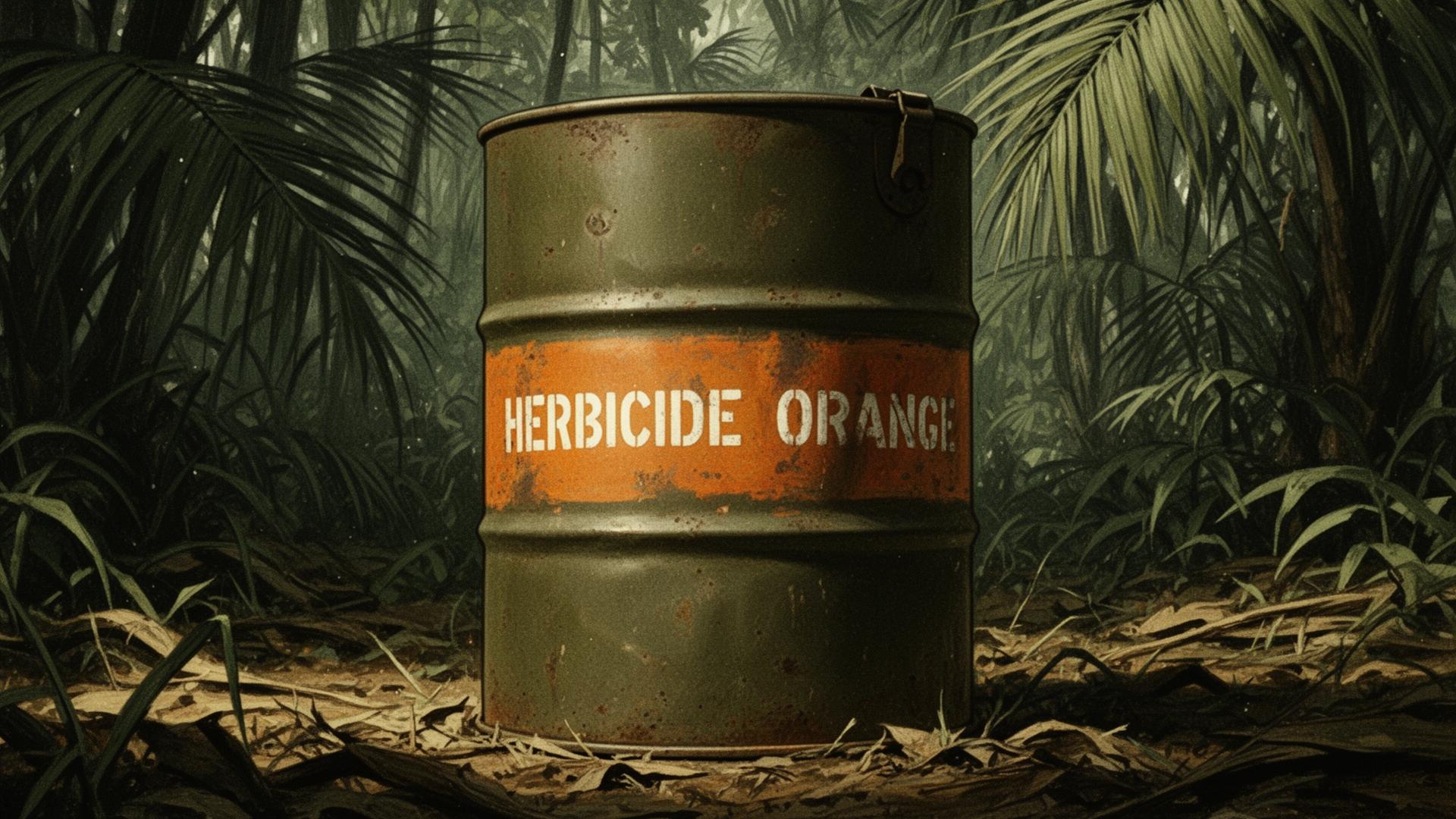
Agent Orange was the most widely used of several tactical herbicides — including Agents Blue, White, Purple, Pink, and Green — sprayed by U.S. forces during the Vietnam War to defoliate jungle cover and destroy crops. These herbicides contained dioxin (TCDD), a contaminant later linked to cancers, cardiovascular disease, diabetes, and neurological conditions.
A presumptive condition means the VA automatically presumes the condition was caused by qualifying military service, so you do not need to prove a direct nexus. If you served in a recognized location during the qualifying dates and develop a listed condition, the VA grants service-connection without requiring the standard medical link.
Why this matters: if your claim was denied before a condition or location became presumptive, the law allows you to reopen it — often with retroactive benefits to the original filing date.
Disclaimer: Compiled from publicly available VA regulations, the Agent Orange Act of 1991, and the PACT Act of 2022. Dates and conditions are subject to change as VA rulemaking evolves.
Oakridge Claims is a private business and is not affiliated with, endorsed by, or operated by the U.S. Department of Veterans Affairs. No specific outcome, rating, or approval can be guaranteed — results depend on the individual facts of each case and applicable law.
Locations & Timeframes of Recognized Exposure
To qualify for presumptive service-connection, your service must fall within both a recognized location and the qualifying date range below.

Vietnam (In-Country)
January 9, 1962 – May 7, 1975
Brown Water Navy
January 9, 1962 – May 7, 1975
Vessels operating on Vietnam's inland waterways (Mekong, Saigon River, etc.) — covered as in-country service.
Blue Water Navy
January 9, 1962 – May 7, 1975
Vessels operating within 12 nautical miles of the Vietnamese coast (Blue Water Navy Vietnam Veterans Act of 2019 / Procopio v. Wilkie).
Thailand
January 9, 1962 – June 30, 1976
Any U.S. or Royal Thai military base, regardless of MOS or duty location (PACT Act expansion).
Korean DMZ
September 1, 1967 – August 31, 1971
Laos
December 1, 1965 – September 30, 1969
Cambodia
April 16, 1969 – April 30, 1969
At Mimot or Krek, Kampong Cham Province
Guam or American Samoa
January 9, 1962 – July 31, 1980
Including territorial waters
Johnston Atoll
January 1, 1972 – September 30, 1977
Including ships that called at Johnston Atoll
C-123 Aircraft Crews
1969 – 1986
Air Force Reservists with regular and repeated operation, maintenance, or service onboard C-123 aircraft previously used to spray herbicides.
DoD Herbicide Test & Storage Sites
Beyond combat zones, the Department of Defense tested, stored, or transported tactical herbicides at dozens of stateside and overseas sites. Veterans assigned to these locations during the listed dates may qualify for service-connection on a direct exposure basis (not presumptive — exposure must be documented). The VA maintains the official list at publichealth.va.gov.
Eglin AFB, Florida
1962–1970
Test Areas C-52A and others — Agent Orange test sprays.
Fort Drum, New York
1959
Limited herbicide spray testing.
Gagetown, New Brunswick (Canada)
1966–1967
U.S./Canadian joint herbicide testing.
Pranburi, Thailand
April 1964 – 1965
Agent Orange field tests.
Aberdeen Proving Ground, Maryland
1962–1963
Agent Purple/Orange limited testing.
Kauai, Hawaii
1965–1968
Limited field tests with Agents Orange and Purple.
NCBC Gulfport, Mississippi
1968–1977
Storage of Agent Orange drums returned from Vietnam prior to 1977 at-sea incineration.
Johnston Atoll
1972–1977
Storage and 1977 at-sea incineration aboard the M/T Vulcanus.
Selected examples — over 70 sites are recognized by the DoD. If you served at a base not listed here, the VA's full inventory is the authoritative source.
When Conditions Became Presumptive
Grouped by era so you can see how the list of recognized conditions has expanded from the original 1991 Agent Orange Act through the 2022 PACT Act.
1990s
1991 – 1996First wave of presumptives following the Agent Orange Act of 1991, which directed the VA to recognize conditions linked to herbicide exposure.
February 5, 1991
- •Chloracne or other acne-form disease
- •Soft tissue sarcoma (excluding osteosarcoma, chondrosarcoma, Kaposi's sarcoma, mesothelioma)
February 6, 1991
February 3, 1994
- •Porphyria cutanea tarda (PCT)
- •Hodgkin's disease
June 9, 1994
November 7, 1996
2000s
2001 – 2009Expansion of presumptives based on Institute of Medicine reviews — added major chronic and hematologic conditions.
May 8, 2001
October 16, 2003
May 7, 2009
2010s
2010 – 2013Cardiovascular and neurological conditions were added, opening retroactive claims for thousands of Vietnam-era veterans.
August 31, 2010
September 6, 2013
PACT Act Era
2021 – PresentThe Honoring our PACT Act of 2022 (and 2021 rulemaking) expanded both presumptive conditions and recognized exposure locations — the largest expansion in VA history.
January 1, 2021
January 10, 2022
- •Monoclonal gammopathy of undetermined significance (MGUS)
- •Hypertension
Frequently Asked Questions
Common questions about Agent Orange, herbicide presumptions, and reopening prior denials.
Were You Exposed to Agent Orange or Other Herbicides?
If your condition was previously denied and is now on this list, you may be able to reopen your claim — potentially with retroactive benefits. We can help evaluate your options.
Free Case Evaluation