

What Happens After a VA Claim Denial?
What Happens After a VA Claim Denial?
Receiving a VA denial can feel frustrating—especially when the condition itself is very real.
Many veterans assume a denial means:
“That’s it. The claim is over.”
In many situations, that is not true.
A denial is often the beginning of determining:
- why the claim was denied,
- what evidence may be missing, and
- which review option may make the most sense moving forward.
Understanding the available appeal and review lanes is critical.
First Step: Read the Rating Decision Carefully
One of the biggest mistakes veterans make is immediately filing another claim without understanding the reason for denial.
The Rating Decision often explains:
- what evidence VA considered,
- what element was missing,
- why the examiner reached a negative opinion, and
- which laws or regulations VA applied.
The denial language matters.
The best next step often depends entirely on why the claim was denied.
Main Review Options After a VA Denial
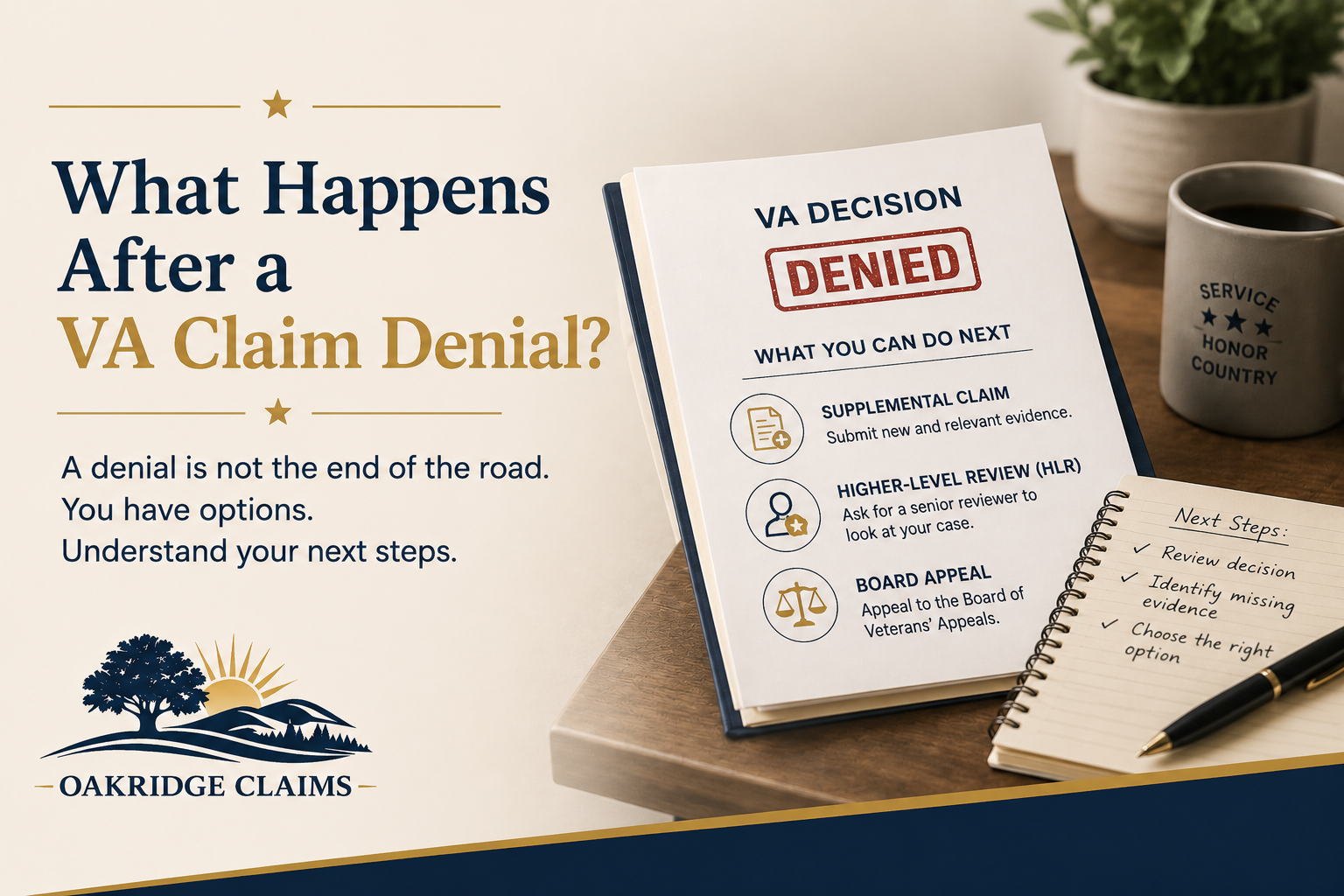
1. Supplemental Claim
A Supplemental Claim allows veterans to submit new and relevant evidence.
This option is commonly used when:
- additional medical evidence exists,
- a nexus opinion is obtained,
- new treatment records become available, or
- the original claim lacked sufficient development.
Supplemental Claims are often useful when the problem is missing or insufficient evidence.
2. Higher-Level Review (HLR)
A Higher-Level Review asks a more senior VA adjudicator to review the prior decision for possible errors.
Importantly:
No new evidence may be submitted during an HLR.
HLRs are often appropriate when:
- VA overlooked favorable evidence,
- the law was applied incorrectly,
- the rating criteria were misapplied, or
- the evidence already in the file supported a different outcome.
3. Board of Veterans’ Appeals (BVA)
Veterans may also appeal to the Board of Veterans’ Appeals.
Board Appeals generally involve:
- longer timelines,
- more formal appellate review, and
- potential review by a Veterans Law Judge.
Different Board lanes exist depending on whether the veteran:
- wants to submit evidence,
- wants a hearing, or
- wants direct review of the existing record.
Can You File Again After Another Denial?
Potentially, yes.
The VA system allows multiple review pathways depending on the procedural history of the claim.
But repeatedly filing without addressing the actual reason for denial often leads to frustration and delays.
Common Mistakes After a Denial
1. Filing Without Understanding the Denial
Many veterans focus only on the fact they were denied—not why.
That distinction matters.
2. Submitting the Same Evidence Again
Simply re-uploading the same records often does not fix the issue.
The evidence submitted should directly address the reason for denial.
3. Choosing the Wrong Review Lane
Not every denial should go to HLR.
Not every case requires a Board Appeal.
The right strategy often depends on whether the problem is:
- missing evidence,
- a legal error,
- an inadequate examination, or
- an unfavorable medical opinion.
A Denial Does Not Always Mean the Claim Is Weak
This is important to understand.
Many valid claims are initially denied because:
- the nexus was insufficiently developed,
- important records were missing,
- the wrong theory was pursued, or
- VA relied heavily on an unfavorable examination.
Sometimes the issue is not the condition itself—but how the claim was developed and supported.
Final Thoughts
A VA denial is not always the end of the process.
But the next step should usually be strategic—not reactive.
Understanding:
- why the claim was denied,
- what evidence is missing, and
- which review option fits the case
can significantly affect the direction of an appeal.
Need Help Reviewing a VA Denial?
If your VA claim was denied and you are unsure which review option may make sense, your case may benefit from a detailed review.
Oakridge Claims provides VA-accredited representation focused on evidence-based claim development and appeals.
Schedule a free consultation:
https://www.oakridgeclaims.com/prescreen
Clarity when it matters most.
This post is for informational purposes only and does not constitute legal or medical advice. Oakridge Claims is a private, independent organization and is not affiliated with the U.S. Department of Veterans Affairs. Representation is provided by a VA-accredited claims agent in accordance with 38 C.F.R. § 14.636. Outcomes depend on individual facts; no specific result is guaranteed.