

Evidence & C&P Exams· Mar 9, 2026· 3 min read
The dust has settled on the rescinded Medication Rule. Here is what it means for your upcoming C&P exam | Agent Insight
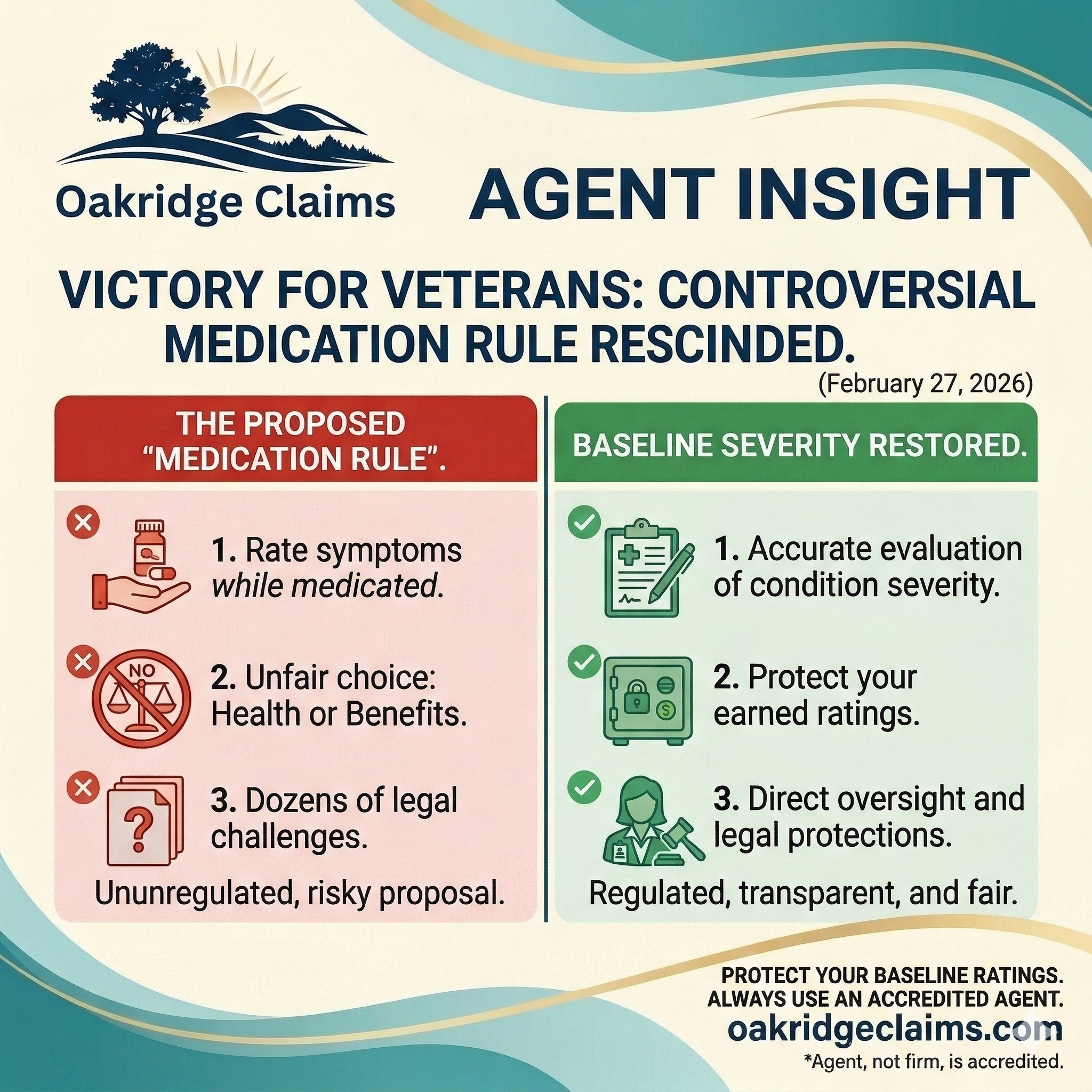
If you felt a wave of anxiety in mid-February, you weren’t alone. On February 17, 2026, the VA quietly published an "Interim Final Rule" that threatened to fundamentally change how your disability ratings are calculated.
The rule, titled "Evaluative Rating: Impact of Medication," essentially told VA medical examiners to rate you based on how you function while taking medication, rather than the underlying severity of your condition.
The good news? As of February 27, 2026, the VA has formally rescinded this rule. At Oakridge Claims, we watched this situation closely. Today, we’re breaking down what happened, why it was rescinded, and what it means for your pending claims.
The "Medication Rule" Explained: A Threat to Ratings
For years, court precedents (most recently Ingram v. Collins in 2025) have required the VA to determine a veteran’s "baseline severity"—essentially, how bad is the condition without the help of drugs?
The VA’s proposed rule attempted to override those courts. Under the interim rule, if your PTSD was manageable with medication, or if your chronic pain was dulled by daily prescriptions, the VA wanted to give you a lower rating because you "looked better" on paper during the exam.
Why the Massive Backlash?
The veteran community responded with unprecedented speed. Over 20,000 public comments were filed in just a few days. The core concerns were clear:
The "Impossible Choice": Veterans felt they had to choose between taking their life-improving medication and losing their earned benefits.
Incentivizing Poor Health: Advocacy groups warned that veterans might stop taking their medicine before a C&P exam just to ensure their rating accurately reflected their true condition.
Side Effects Ignored: The rule didn't account for the fact that many medications solve one problem (like pain) while creating others (like liver issues or extreme fatigue).
The Rescission: A Victory for Veterans
Under heavy pressure from Congress and organizations like the VFW and American Legion, VA Secretary Doug Collins first "halted enforcement" on February 19 before formally rescinding the rule on February 27.
The VA admitted that the rule caused "uncertainty" and could "undermine confidence in the benefits system." By rescinding it, the VA has restored the status quo. The old rules are back.
What This Means for Your Claim Today
If you have a claim currently in the system or are preparing to file, here is the bottom line:
The "Ingram" Precedent Still Stands: The VA must still consider your baseline severity without the ameliorative effects of medication unless the specific diagnostic code says otherwise.
You Are Protected: You do NOT need to stop taking your prescribed treatment to "prove" your disability.
Accuracy Matters: During your C&P exam, it is more important than ever to describe your "flare-ups" and what your life looks like when the medication isn't working or when the side effects kick in.
The Oakridge Perspective
This situation highlights why working with a VA Accredited Claims Agent is so vital. During the ten days this rule was "active," unaccredited consultants were giving dangerous advice—telling veterans to cancel exams or stop treatments.
As Accredited Agents, we provide guidance based on the law, not the rumors. We are glad to see the VA do the right thing and protect the integrity of the rating schedule.
Do you have a pending claim and aren't sure how the latest policy shifts affect your strategy?
Don't guess with your future. Contact Oakridge Claims today for a professional review of your file.
Reviewed by Esteban Magallon, VA-Accredited Claims AgentLast updated: March 9, 2026