

★ Musculoskeletal
Cervical Spine (Neck) VA Rating
38 CFR § 4.71a, Diagnostic Code 5237
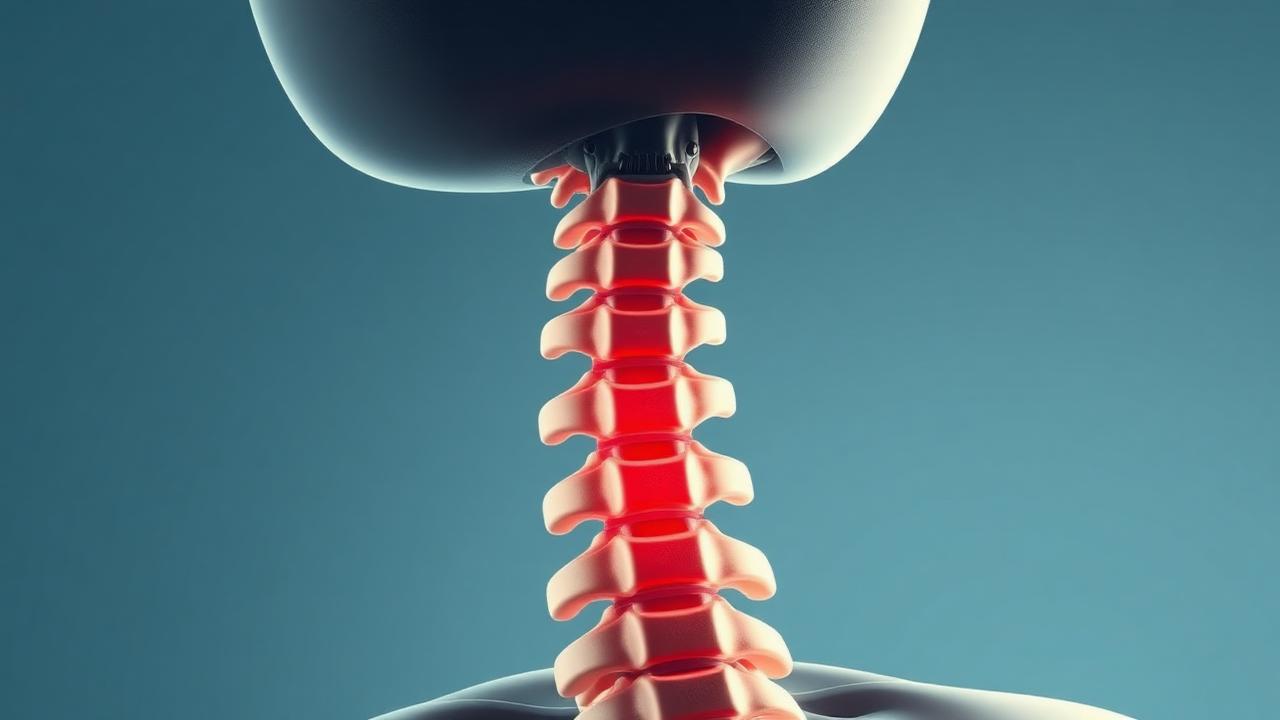
Overview
Cervical strain, degenerative disc disease, and herniated discs all use the General Spine Formula at smaller motion ranges.
Cervical radiculopathy into the arms is rated separately under DC 8510–8513.
In Depth
The General Rating Formula for the Spine at 38 CFR § 4.71a lists normal cervical forward flexion as 0 to 45 degrees, extension 0 to 45 degrees, lateral flexion 0 to 45 degrees to each side, and rotation 0 to 80 degrees to each side, for a combined normal cervical range of motion of 340 degrees. Neck disabilities use the same general formula as the low back, but with these separate, smaller cervical-specific thresholds — lumbar figures cannot be substituted for cervical measurements.
Under 38 CFR § 4.59, painful, unstable, or malaligned joints are considered entitled to at least the minimum compensable rating for that joint. 38 CFR §§ 4.40 and 4.45 direct VA to consider additional functional loss from pain, weakness, fatigability, and incoordination — including loss that only shows up after repeated use or during a flare-up (DeLuca v. Brown). Correia v. McDonald further requires that range-of-motion testing address active motion, passive motion, weight-bearing, and non-weight-bearing where those distinctions are medically applicable, so an exam that records only one type of motion may be incomplete. Applied to the neck, this means pain that limits forward flexion to 30 degrees on a good day but to 15 degrees during a flare should be reflected as the functional baseline the veteran actually experiences, not just the best measurement obtained on a single visit.
Cervical radiculopathy into the arms and hands is evaluated separately under the peripheral-nerve codes in 38 CFR § 4.124a — most commonly DC 8510 through DC 8513 depending on which nerve group (upper, middle, lower, or all radicular groups) is affected — consistent with Note (1) to the general spine formula, which directs separate evaluation of objective neurologic abnormalities. Whether the dominant or non-dominant arm is involved changes the percentage tiers within those nerve codes.
Cervicogenic headaches — headaches originating from cervical spine pathology rather than a primary headache disorder — are a recognized and frequently claimed secondary condition to cervical strain or degenerative disc disease, typically evaluated under DC 8100 (the same code used for migraines) once a nexus opinion establishes the cervical origin.
Because the maximum schedular rating for the cervical spine alone (40% for unfavorable ankylosis) is lower than the low back's ceiling, veterans with significant neck-related impairment frequently combine the orthopedic cervical rating with a separate upper-extremity radiculopathy evaluation and, where applicable, a secondary headache rating, to more fully reflect the overall disability picture.
How to Establish Service Connection
- Direct service connection: in-service neck injury or chronic neck pain documented.
- Secondary: cervical issues secondary to upper back, shoulder, or TBI.
Rating Criteria
Paraphrased from 38 CFR § 4.71a, Diagnostic Code 5237
| Rating | Criteria |
|---|---|
| 10% | Forward flexion of the cervical spine greater than 30° but not greater than 40°; or combined range of motion greater than 170° but not greater than 335°. |
| 20% | Forward flexion greater than 15° but not greater than 30°; or combined range of motion not greater than 170°; or muscle spasm/guarding causing abnormal gait or spinal contour. |
| 30% | Forward flexion of the cervical spine 15° or less; or favorable ankylosis of the entire cervical spine. |
| 40% | Unfavorable ankylosis of the entire cervical spine. |
| 100% | Unfavorable ankylosis of the entire spine. |
See what each percentage pays in 2026 and how it combines with your current rating →
Cervical Spine Range of Motion Chart
38 CFR § 4.71a, General Rating Formula for Diseases and Injuries of the Spine
| Movement | Normal range | Where it becomes compensable |
|---|---|---|
| Forward flexion | 0° to 45° | 10% at 30°; 20% at 15°; 30% when the cervical spine is ankylosed in a favorable position |
| Extension | 0° to 45° | Counts toward the 170°/335° combined-ROM thresholds |
| Lateral flexion (each side) | 0° to 45° | Counts toward combined range of motion |
| Lateral rotation (each side) | 0° to 80° | Counts toward combined range of motion |
- Normal combined cervical range of motion is 340°. A combined range of 170° or less supports 10%; 335° or less with muscle spasm, guarding, or localized tenderness also supports 10%.
- Unfavorable ankylosis of the entire cervical spine is 40%.
- Cervical radiculopathy into the arms is rated separately under the peripheral nerve codes in 38 CFR § 4.124a.
- Measurements are taken with a goniometer, both actively and passively, and VA must consider additional loss of function from pain, weakness, fatigability, and incoordination (38 CFR §§ 4.40 and 4.45, DeLuca v. Brown).
- If flare-ups reduce motion below the measured range, the examiner is expected to estimate that additional loss — describe frequency, duration, and severity of flare-ups at the exam (Sharp v. Shulkin).
Evidence Checklist
- Imaging (MRI/X-ray) and goniometer measurements.
- Documentation of cervical radiculopathy into arms or hands.
- Records of muscle spasm, guarding, or abnormal posture.
Evidence Templates
Common formats of evidence the VA looks for in this type of claim. These describe what the documents typically include — they are not legal forms or medical opinions, and Oakridge Claims does not draft them.
Range-of-motion measurements (goniometer findings)
Treatment notes or examination reports recording measured motion in degrees. 38 CFR § 4.59 and the Correia v. McDonald framework contemplate testing in active motion, passive motion, weight-bearing, and non-weight-bearing where applicable.
Imaging reports (X-ray, MRI, CT)
Radiology reports identifying the underlying pathology. Several diagnostic codes in 38 CFR § 4.71a require X-ray confirmation of arthritis before a compensable evaluation applies.
Treatment records showing flare-up frequency
Contemporaneous clinical notes documenting when the condition worsens, how long it lasts, and any prescribed rest, bracing, or activity restriction. DeLuca v. Brown addresses functional loss during flare-ups.
Evidence VA Commonly Cites in These Claims
Descriptive summary of evidence types frequently referenced in rating decisions for this condition. Not a checklist of actions to take — every claim is decided on its own facts.
- ★Confirm the record contains cervical-specific measurements; examinations sometimes record thoracolumbar findings only when both spine segments are claimed.
- ★Where arm symptoms exist, a neurologic examination or nerve study identifying the specific nerve group is what the § 4.124a codes are written around.
- ★Hand dominance is a rating factor for upper-extremity nerve evaluations; the record should reflect it, as VA presumes right-hand dominance absent contrary evidence.
- ★Documentation of muscle spasm or guarding and whether it produces abnormal gait or abnormal spinal contour maps directly onto specific tiers of the general formula.
- ★If headaches are present alongside neck pain, ask that treatment records address whether they are believed to be cervicogenic, since that distinction affects which theory of service connection applies.
Illustrative Scenarios
These are hypothetical educational examples — not actual case results, predictions, or guarantees of outcomes.
Illustrative: cervical radiculopathy affecting the dominant arm (hypothetical)
A hypothetical veteran's cervical spine condition is accompanied by documented radiating pain, numbness, and grip weakness in the dominant right arm, with a nerve conduction study identifying the affected nerve group. This illustrates how a separate upper-extremity nerve evaluation can accompany the orthopedic neck rating — it is not a description of an actual case or a specific combined outcome.
Common pitfalls VA sees
- Submitting only thoracolumbar range-of-motion figures when the cervical spine is also being claimed — the two segments use different normal-motion figures and different diagnostic thresholds.
- Leaving arm numbness, tingling, or weakness undocumented as a distinct neurologic finding, when it may support a separate evaluation under the § 4.124a upper-extremity codes.
- Not identifying hand dominance in the file when upper-extremity radiculopathy is at issue.
- Assuming headaches associated with neck pain are automatically covered by the cervical spine rating rather than potentially requiring their own separate secondary claim.
- Treating muscle spasm and guarding as irrelevant details rather than specific findings the general rating formula assigns percentage weight to.
Common Secondary Conditions
Conditions frequently service-connected as secondary to Cervical Spine (Neck):
What the C&P Exam Documents
General information about how this condition is typically evaluated. This is not coaching on what to say and is not a substitute for medical or legal advice.
- →Expect measurement of cervical forward flexion, extension, lateral flexion (both sides), and rotation (both sides); note where pain begins for each motion.
- →Describe any numbness, tingling, or weakness radiating into the arms or hands so the examiner can assess whether a separate nerve evaluation may be appropriate.
- →Mention whether headaches accompany your neck symptoms and whether they seem tied to neck position or flare-ups.
- →As with any joint exam, describe flare-up frequency, duration, and additional motion loss during flares.
Frequently Asked Questions
Have a Cervical Spine (Neck) claim or denial?
Tell us about your claim, rating increase, or VA decision for a free case evaluation — a decision letter is helpful but not required. Most requests are reviewed within 3–5 business days.
Requesting a consultation does not create representation and is not a guarantee of any outcome. Representation begins only after a written fee agreement and VA Form 21-22a are signed.
Educational content only — not legal advice and not medical advice. Rating criteria on this page are summarized in plain English from 38 CFR Part 4; consult VA.gov or the current Code of Federal Regulations for official criteria. This page provides general education about how the VA rates this condition; it is not individualized advice, does not establish a representation relationship, and should not be used to self-diagnose, self-treat, or decide a course of action without speaking to a qualified clinician and a VA-accredited representative. Outcomes depend on each veteran's individual facts, evidence, and the adjudicator's judgment; no specific rating, effective date, or other result is guaranteed. Oakridge Claims is a private business and is not affiliated with, endorsed by, or operated by the US Department of Veterans Affairs.