

★ Musculoskeletal
Lumbar Spine (Low Back) VA Rating
38 CFR § 4.71a, Diagnostic Code 5237 (General Rating Formula for Spine)
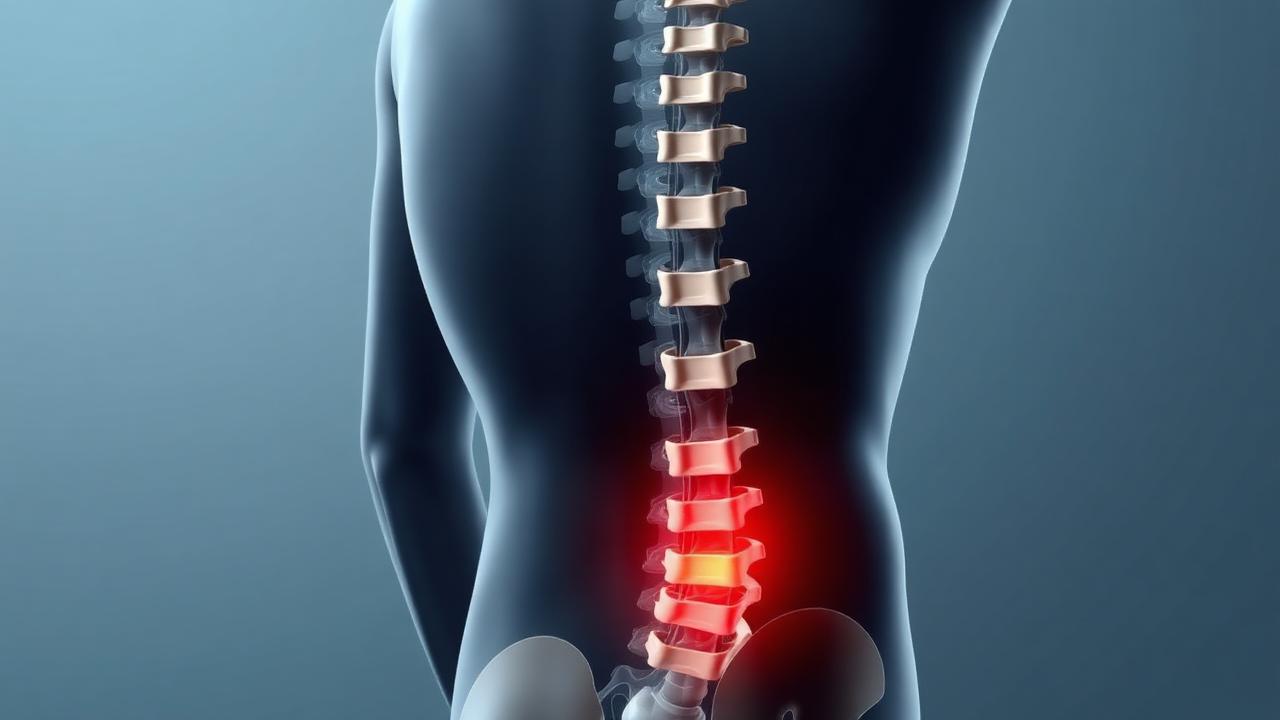
Overview
VA uses the General Rating Formula for the Spine — measured in degrees of motion at the C&P exam.
Intervertebral disc syndrome (IVDS) can be rated separately based on incapacitating episodes per year.
Radiculopathy (sciatica) is rated separately as a neurological condition (DC 8520).
In Depth
38 CFR § 4.71a lists normal thoracolumbar forward flexion as 0 to 90 degrees, with a normal combined range of motion of 240 degrees. The General Rating Formula for Diseases and Injuries of the Spine evaluates the low back primarily on forward flexion, combined range of motion, muscle spasm or guarding severe enough to cause abnormal gait or abnormal spinal contour, and ankylosis — applying the same degree thresholds regardless of whether the diagnostic code is strain (DC 5237), degenerative arthritis (DC 5242), or IVDS (DC 5243).
Under 38 CFR § 4.59, painful, unstable, or malaligned joints are considered entitled to at least the minimum compensable rating for that joint. 38 CFR §§ 4.40 and 4.45 direct VA to consider additional functional loss from pain, weakness, fatigability, and incoordination — including loss that only shows up after repeated use or during a flare-up (DeLuca v. Brown). Correia v. McDonald further requires that range-of-motion testing address active motion, passive motion, weight-bearing, and non-weight-bearing where those distinctions are medically applicable, so an exam that records only one type of motion may be incomplete. For the spine specifically, this means an exam that records forward flexion to 70 degrees without pain but stops at 50 degrees once pain begins should note the point pain begins as the functional limit, and should ideally test flexion more than once to capture any additional loss with repetition.
Intervertebral disc syndrome carries an alternate rating path based on incapacitating episodes — periods of acute signs and symptoms requiring bed rest prescribed by a physician and treatment by a physician, as defined in the regulation itself. VA rates IVDS under whichever method (the general ROM-based formula or the incapacitating-episode formula) produces the higher evaluation, but self-directed rest days that were not physician-prescribed do not satisfy the regulatory definition.
Note (1) to the General Rating Formula directs VA to evaluate any associated objective neurologic abnormalities — including radiculopathy and any bowel, bladder, or sexual dysfunction — under an appropriate separate diagnostic code. This is not pyramiding under 38 CFR § 4.14, because the orthopedic evaluation (motion, spasm, ankylosis) and the neurologic evaluation (nerve-specific paralysis codes) compensate for distinct impairments arising from the same underlying spine condition.
Because the maximum schedular rating for the low back alone is 50% (unfavorable ankylosis of the entire thoracolumbar spine), veterans with more severe overall impairment frequently combine the orthopedic rating with a separate radiculopathy evaluation (or, in rarer cases, bowel/bladder impairment), and in some cases pursue TDIU where the combined effect of these ratings still does not fully capture the impact on employability.
How to Establish Service Connection
- Direct: documented back injury, treatment, or strain in service records.
- Continuity of symptomatology: chronic back pain since separation, even without continuous treatment.
- Secondary: low back conditions secondary to a service-connected knee, ankle, or hip alters gait.
Rating Criteria
Paraphrased from 38 CFR § 4.71a, Diagnostic Code 5237 (General Rating Formula for Spine)
| Rating | Criteria |
|---|---|
| 10% | Forward flexion of the thoracolumbar spine greater than 60° but not greater than 85°; or combined range of motion greater than 120° but not greater than 235°; or muscle spasm/guarding/localized tenderness not resulting in abnormal gait or spinal contour. |
| 20% | Forward flexion greater than 30° but not greater than 60°; or combined range of motion not greater than 120°; or muscle spasm or guarding severe enough to result in abnormal gait or abnormal spinal contour. |
| 40% | Forward flexion of the thoracolumbar spine 30° or less; or favorable ankylosis of the entire thoracolumbar spine. |
| 50% | Unfavorable ankylosis of the entire thoracolumbar spine. |
| 100% | Unfavorable ankylosis of the entire spine. |
See what each percentage pays in 2026 and how it combines with your current rating →
Thoracolumbar Spine Range of Motion Chart
38 CFR § 4.71a, General Rating Formula for Diseases and Injuries of the Spine
| Movement | Normal range | Where it becomes compensable |
|---|---|---|
| Forward flexion | 0° to 90° | 10% at 60°; 20% at 30°; 40% when flexion is 30° or less |
| Extension | 0° to 30° | Counts toward the 120°/235° combined-ROM thresholds for 10% and 20% |
| Lateral flexion (each side) | 0° to 30° | Counts toward combined range of motion |
| Lateral rotation (each side) | 0° to 30° | Counts toward combined range of motion |
- Normal combined thoracolumbar range of motion is 240°. A combined range of 120° or less supports 10%; not greater than 120° with additional findings supports 20%.
- Muscle spasm or guarding severe enough to cause an abnormal gait or abnormal spinal contour supports 20% regardless of the measured degrees.
- Favorable ankylosis of the entire thoracolumbar spine is 40%; unfavorable ankylosis is 50%, and unfavorable ankylosis of the entire spine is 100%.
- Radiculopathy is rated separately under 38 CFR § 4.124a (e.g. DC 8520 for the sciatic nerve) — it is not included in the spine evaluation.
- Measurements are taken with a goniometer, both actively and passively, and VA must consider additional loss of function from pain, weakness, fatigability, and incoordination (38 CFR §§ 4.40 and 4.45, DeLuca v. Brown).
- If flare-ups reduce motion below the measured range, the examiner is expected to estimate that additional loss — describe frequency, duration, and severity of flare-ups at the exam (Sharp v. Shulkin).
Evidence Checklist
- Service treatment records showing back complaints or sick call visits.
- Current MRI or X-ray imaging.
- Range-of-motion measurements with goniometer at the C&P exam.
- Statements describing flare-ups: frequency, duration, and additional functional loss.
Evidence Templates
Common formats of evidence the VA looks for in this type of claim. These describe what the documents typically include — they are not legal forms or medical opinions, and Oakridge Claims does not draft them.
Range-of-motion measurements (goniometer findings)
Treatment notes or examination reports recording measured motion in degrees. 38 CFR § 4.59 and the Correia v. McDonald framework contemplate testing in active motion, passive motion, weight-bearing, and non-weight-bearing where applicable.
Imaging reports (X-ray, MRI, CT)
Radiology reports identifying the underlying pathology. Several diagnostic codes in 38 CFR § 4.71a require X-ray confirmation of arthritis before a compensable evaluation applies.
Treatment records showing flare-up frequency
Contemporaneous clinical notes documenting when the condition worsens, how long it lasts, and any prescribed rest, bracing, or activity restriction. DeLuca v. Brown addresses functional loss during flare-ups.
Evidence VA Commonly Cites in These Claims
Descriptive summary of evidence types frequently referenced in rating decisions for this condition. Not a checklist of actions to take — every claim is decided on its own facts.
- ★Ensure the claims file contains measured range-of-motion findings in degrees rather than narrative descriptions such as 'limited' or 'reduced' — the rating formula is expressed entirely in degrees.
- ★If radicular symptoms are present, confirm that a nerve-specific evaluation (EMG, nerve conduction study, or a neurologic examination identifying the affected nerve) exists in the record, since Note (1) contemplates a separate evaluation for objective neurologic abnormalities.
- ★For IVDS, bed rest counts under the regulation only when a physician prescribed it and treated the veteran. Records reflecting that prescription and treatment are what the incapacitating-episode formula is written around.
- ★Where the condition fluctuates, longitudinal treatment records across several visits describe the disability picture more completely than a single examination snapshot.
- ★Ask whether the exam tested active, passive, weight-bearing, and non-weight-bearing motion consistent with Correia v. McDonald, particularly if only one type of motion was recorded.
Illustrative Scenarios
These are hypothetical educational examples — not actual case results, predictions, or guarantees of outcomes.
Illustrative: general formula versus incapacitating episodes (hypothetical)
A hypothetical veteran with IVDS has forward flexion measured at 55 degrees, which maps to one tier under the general formula, but also had two physician-prescribed bed-rest periods documented in the past year, which maps to a different tier under the incapacitating-episode formula. VA would apply whichever formula produces the higher evaluation. This illustrates how the two paths interact — it is not a description of any actual claim or a specific outcome.
Common pitfalls VA sees
- Assuming the diagnostic code label drives the percentage. Most spine codes route to the same general rating formula.
- Treating self-directed rest days as 'incapacitating episodes.' The regulation requires physician-prescribed bed rest and physician treatment.
- Leaving radiculopathy undocumented as a separate neurologic finding, when the general formula's Note (1) contemplates evaluating it separately.
- Filing for a lumbar increase without any post-decision examination or treatment record — a claim for increase is evaluated on evidence of the current level of disability.
- Missing the one-year window from a rating decision to request Higher-Level Review or file a Board appeal under the AMA.
Common Secondary Conditions
Conditions frequently service-connected as secondary to Lumbar Spine (Low Back):
What the C&P Exam Documents
General information about how this condition is typically evaluated. This is not coaching on what to say and is not a substitute for medical or legal advice.
- →Range-of-motion measurements at the C&P exam should reflect the veteran's actual functional limit. Under DeLuca and 38 CFR §§ 4.40 and 4.45, examiners are required to consider additional limitation from pain, weakness, fatigability, and flare-ups.
- →Functional impact at work and in daily life — lifting, sitting, standing, and similar activities — is part of the record the examiner documents.
- →Veterans should answer honestly and not exceed their normal pain tolerance during the exam; accurate measurements depend on accurate effort.
- →If the exam only measures active motion, it is reasonable to note whether passive, weight-bearing, or non-weight-bearing motion was also tested, per Correia v. McDonald.
Frequently Asked Questions
Useful Tools & Topics
Have a Lumbar Spine (Low Back) claim or denial?
Tell us about your claim, rating increase, or VA decision for a free case evaluation — a decision letter is helpful but not required. Most requests are reviewed within 3–5 business days.
Requesting a consultation does not create representation and is not a guarantee of any outcome. Representation begins only after a written fee agreement and VA Form 21-22a are signed.
Educational content only — not legal advice and not medical advice. Rating criteria on this page are summarized in plain English from 38 CFR Part 4; consult VA.gov or the current Code of Federal Regulations for official criteria. This page provides general education about how the VA rates this condition; it is not individualized advice, does not establish a representation relationship, and should not be used to self-diagnose, self-treat, or decide a course of action without speaking to a qualified clinician and a VA-accredited representative. Outcomes depend on each veteran's individual facts, evidence, and the adjudicator's judgment; no specific rating, effective date, or other result is guaranteed. Oakridge Claims is a private business and is not affiliated with, endorsed by, or operated by the US Department of Veterans Affairs.