

Evidence & C&P Exams· Mar 10, 2026· 2 min read
DBQ vs. Nexus Letter: Why You Need Both for a Winning VA Claim | Agent Insight
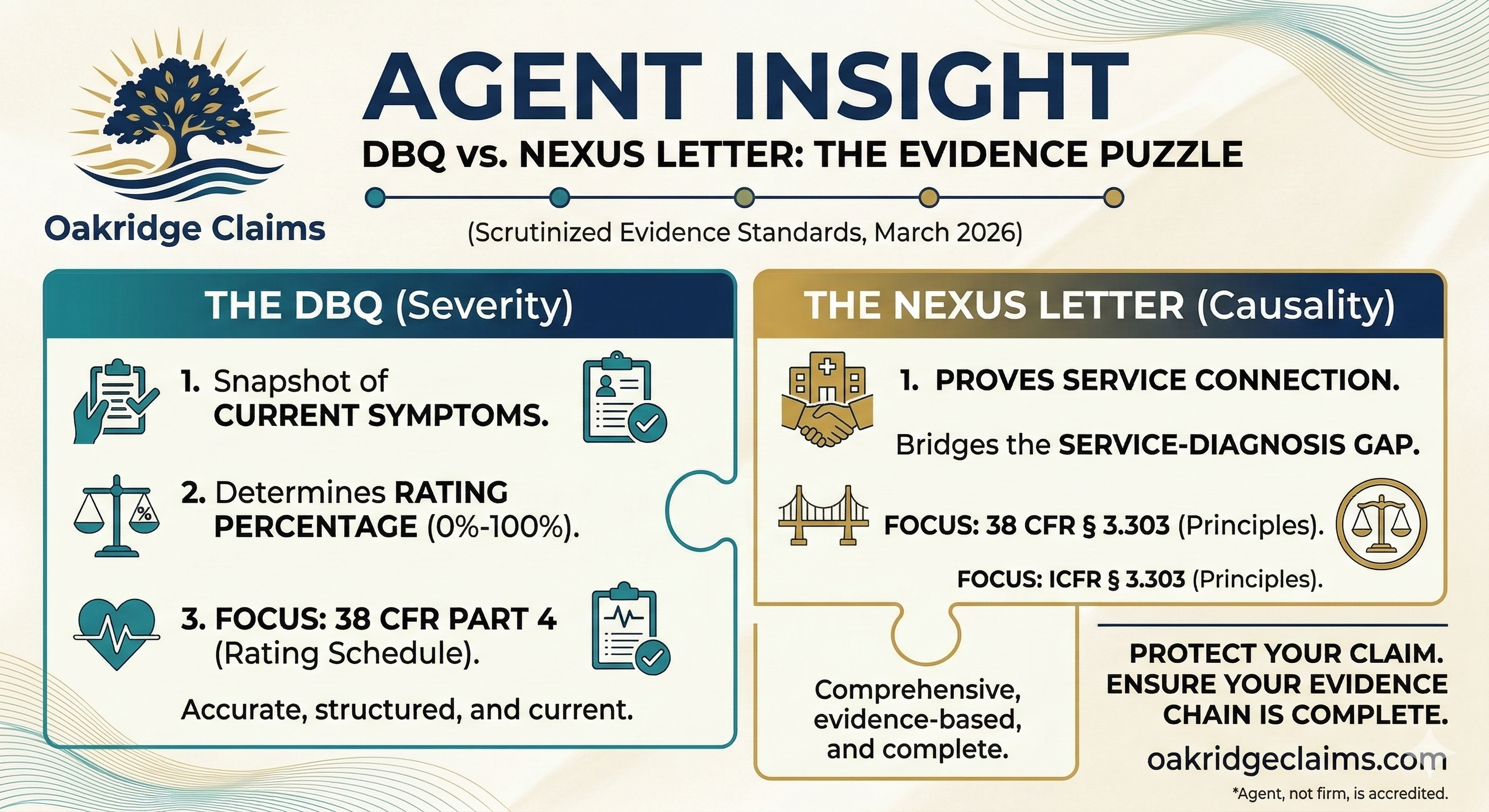
The Evidence Chain: Severity vs. Causality
In the world of VA disability, we see many veterans stuck in the "Denial Loop." They have clear medical evidence of a condition, yet the VA continues to deny service connection. Often, this happens because the veteran submitted a DBQ when they actually needed a Nexus, or vice versa.
To win a claim in 2026, you must provide two distinct types of proof. As an Accredited Agent, I look at these as two pieces of a puzzle that must snap together perfectly.
Piece 1: The DBQ (Disability Benefits Questionnaire)
The DBQ is all about Severity. It answers the question: "How bad is it right now?"
The Function: It provides the raw data (range of motion, frequency of symptoms, social impairment) that the VA uses to assign a percentage (0% to 100%) based on 38 CFR Part 4.
The Limitation: A DBQ documents your current health, but it rarely proves that your health issues started because of your military service.
Piece 2: The Nexus Letter
The Nexus Letter is all about Causality. It answers the question: "Why is the military to blame?"
The Function: It is the formal medical bridge required under 38 CFR § 3.303. It connects your 2026 diagnosis to a specific event, injury, or exposure during your time in service.
The Legal Standard: For a Nexus to be valid, a doctor must state it is "at least as likely as not" (50% probability or greater) that your condition is service-connected.
The 2026 "Template" Crackdown
The VA has significantly increased its scrutiny of private medical evidence this year. They are specifically flagging "DBQ Mills" that churn out documents after a five-minute phone call.
The Agent Insight: A strong Nexus doesn't require an in-person exam, but it must be based on a comprehensive Record Review. If your doctor hasn't reviewed your C-File and Service Treatment Records (STRs), the VA is likely to dismiss the opinion as "insufficient for rating purposes."
Conclusion: Don't Leave a Gap in Your File
A DBQ tells the VA you are hurting; a Nexus Letter tells them they are responsible for it. Submitting one without the other is like trying to drive a car with no wheels—you might have the engine, but you aren't going anywhere.
Is your evidence chain missing a link?
Let an Accredited Agent review your DBQs and medical opinions to ensure they meet the VA's strict 2026 standards. Click the link in our bio to schedule your consultation.
Reviewed by Esteban Magallon, VA-Accredited Claims AgentLast updated: March 10, 2026