

Burn Pit Exposure
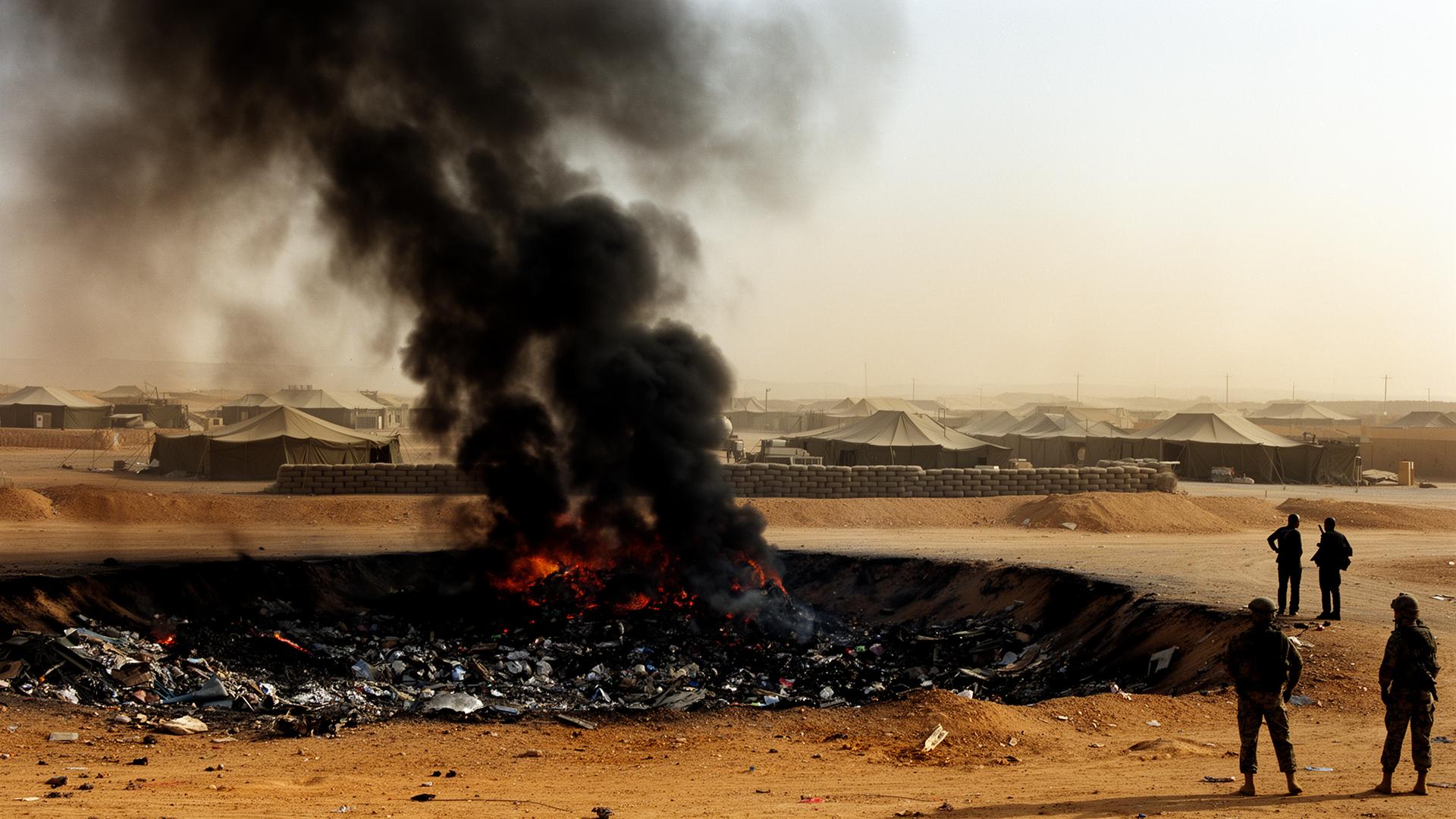
What burn pits were and where they were used
From the early 1990s through the mid-2010s, U.S. forces routinely disposed of solid waste at forward bases by burning it in open-air pits, often using jet fuel as an accelerant. Materials burned included plastics, styrofoam, electronics, paint, solvents, rubber, medical and biohazard waste, ammunition, and human waste — generating dioxins, polycyclic aromatic hydrocarbons, particulate matter, and a long list of recognized carcinogens.
The largest documented burn pit operated at Joint Base Balad in Iraq, where as much as 240 tons of waste per day was incinerated near living quarters. Similar pits operated at Bagram Airfield, Camp Taji, Camp Victory, Camp Anaconda, and dozens of smaller forward operating bases.
Covered locations and time periods (PACT Act § 1119)
- (Bahrain, Iraq, Kuwait, Oman, Qatar, Saudi Arabia, UAE, and the airspace/waters): August 2, 1990 – present.
- Afghanistan, Djibouti, Egypt, Jordan, Lebanon, Somalia, Syria, Uzbekistan, Yemen: September 11, 2001 – present.
- Even brief, transit, or TDY service in a covered location qualifies — a single boots-on-ground day in the qualifying period is sufficient under the statute.
Presumptive conditions added by the PACT Act
The made more than 20 conditions presumptively service-connected for veterans with qualifying deployments. The full list is maintained on our PACT Act Presumptives page; the headline categories are:
- Cancers — brain (including glioblastoma), gastrointestinal, head & neck, kidney, lymphoma, melanoma, pancreatic, reproductive, respiratory (including lung), and bladder cancer.
- Respiratory — asthma diagnosed after service, chronic bronchitis, COPD, chronic rhinitis and sinusitis, emphysema, granulomatous disease, interstitial lung disease, pleuritis, pulmonary fibrosis, sarcoidosis, and constrictive/obliterative bronchiolitis.
- Other — hypertension (added for Vietnam-era exposure effective October 2024).
The Airborne Hazards & Open Burn Pit Registry
The VA's Airborne Hazards and Open Burn Pit Registry (AHOBPR) is a free, voluntary database where eligible veterans can self-report exposure to airborne hazards and request an optional in-person health evaluation.
Registry enrollment is not required to file a — the law does not condition the presumption on registry participation. However, registry data can support a direct service-connection claim for a condition not on the presumptive list, and population-level findings have driven multiple presumptive expansions.
Building a strong claim file
- Confirm your deployment dates and locations from your DD-214, deployment orders, and personnel file.
- Get a current diagnosis from a competent provider — a specialist note (oncology, pulmonology) is stronger than a primary-care chart note.
- Enroll in the Airborne Hazards Registry and request the in-person evaluation; bring the evaluation report into your VA file.
- Add lay statements from buddies who deployed with you describing the , prevailing winds, and proximity to your billeting.
- If your condition is on the presumptive list, file a citing 38 U.S.C. § 1119 and the specific covered location/period.
Where these claims break down
- ×Assuming you must enroll in the Burn Pit Registry before filing a claim — you do not.
- ×Filing only for the headline diagnosis when secondary conditions (sleep apnea secondary to obstructive lung disease, depression secondary to chronic illness) also warrant service-connection.
- ×Not citing the specific covered location and dates on the claim form — make the adjudicator's job easy.
- ×Overlooking the supplemental claim path: pre-2022 denials are eligible for review under the new presumption as new and relevant evidence.
Frequently Asked Questions
References & sources
- 38 U.S.C. § 1119 — Presumption of service connection for diseases associated with exposure to burn pits and other toxins — Cornell Legal Information Institute
- Honoring our PACT Act of 2022 (Pub. L. 117-168) — U.S. Congress
- Airborne Hazards and Open Burn Pit Registry — U.S. Department of Veterans Affairs
- Respiratory Health Effects of Airborne Hazards Exposures in the Southwest Asia Theater of Military Operations (2020) — National Academies of Sciences, Engineering, and Medicine
Useful Tools & Topics
Have questions about your specific case?
Tell us about your claim, rating increase, or VA decision for a free case evaluation — a decision letter is helpful but not required. If your matter fits our current scope, we'll invite you to schedule a consultation.
Disclaimer: This page is for educational purposes only and does not constitute legal advice. Oakridge Claims is a private business and is not affiliated with, endorsed by, or operated by the U.S. Department of Veterans Affairs. No guarantees of outcomes are made. Each claim is decided on its individual facts.
Related guides
Hazardous Noise & Acoustic Trauma
MOS noise exposure tables, presumptive hearing loss and tinnitus considerations.
Burn-Pit Cancer Cluster (Hub)
All PACT Act presumptive cancers tied to burn-pit and airborne-hazard exposure — lung, brain (glioblastoma), kidney, pancreatic, melanoma, and head & neck — in one place with links to each rating page.
Radiation Exposure (Atomic Veterans)
Ionizing radiation presumptives for Atomic Veterans and post-war cleanup participants.
Asbestos Exposure
Mesothelioma, lung cancer, and asbestosis claims — Navy ratings and shipyard workers especially.