

Radiation Exposure (Atomic Veterans)
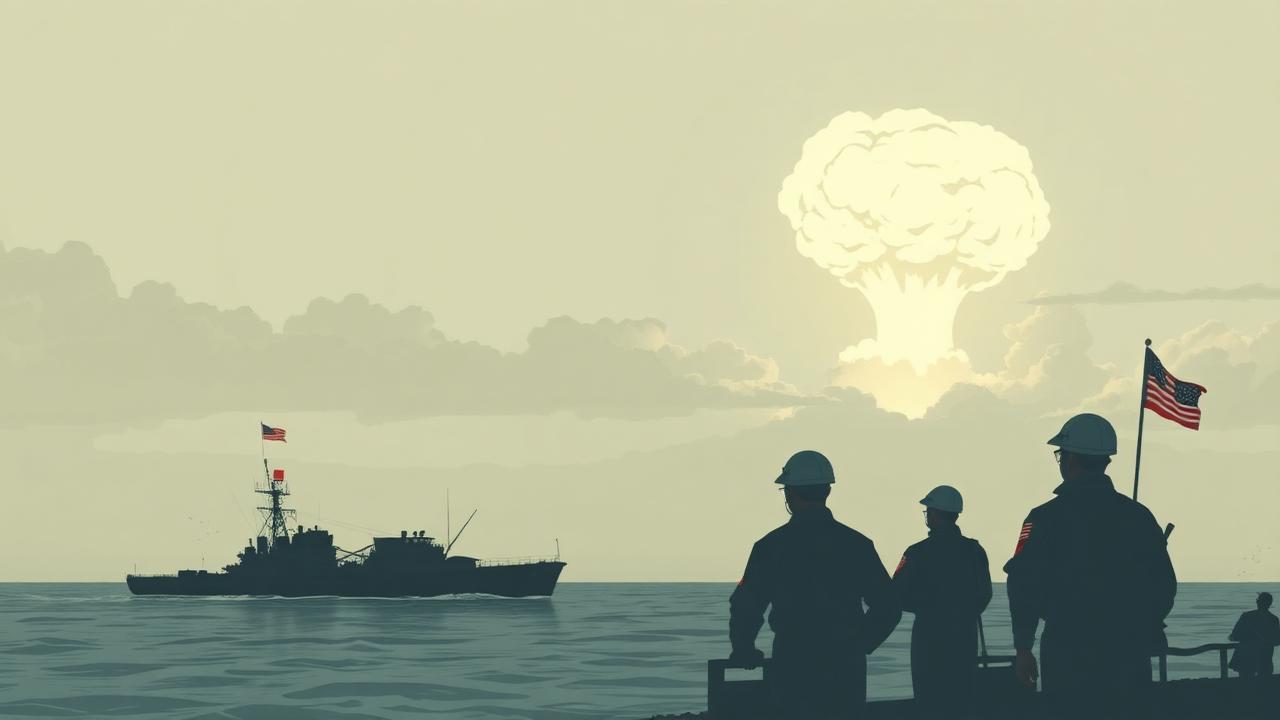
Who is an 'Atomic Veteran'
- Participants in U.S. atmospheric nuclear tests between 1945 and 1962 (Operations Crossroads, Sandstone, Greenhouse, Castle, Redwing, Hardtack, Dominic, etc.).
- U.S. occupation forces in Hiroshima or Nagasaki between August 6, 1945 and July 1, 1946.
- POWs in Japan during the same period.
- Personnel assigned to gaseous diffusion plants (Paducah KY, Portsmouth OH, Oak Ridge K-25) under specific dates.
- Enewetak Atoll cleanup participants (1977–1980).
- Palomares, Spain B-52 incident cleanup (1966) and Thule, Greenland B-52 incident cleanup (1968) — added by the of 2022.
Presumptive radiogenic conditions (38 CFR § 3.309(d))
- Leukemia (other than chronic lymphocytic leukemia)
- Multiple myeloma
- Lymphomas (except Hodgkin's disease)
- Cancers of the thyroid, breast, pharynx, esophagus, stomach, small intestine, pancreas, bile ducts, gall bladder, salivary gland, urinary tract, brain, bone, lung, colon, ovary, and primary liver cancer
- Bronchiolo-alveolar carcinoma
Other radiogenic diseases under 38 CFR § 3.311
Conditions not on the § 3.309(d) presumptive list can still be service-connected as 'radiogenic diseases' under 38 CFR § 3.311. The VA refers the to the Under Secretary for Health, who obtains a dose reconstruction from the Defense Threat Reduction Agency (DTRA) and an opinion on whether the disease is the result of the in-service radiation exposure.
This is a slower path than the § 3.309(d) presumption but it is the only route for, e.g., chronic lymphocytic leukemia, prostate cancer, kidney cancer, and many other cancers not on the presumptive list.
Documentation that strengthens a claim
- DD Form 1141 (Record of Occupational Exposure to Ionizing Radiation), if one exists in your record.
- Unit assignment records placing you at a covered test, occupation, or cleanup operation.
- DTRA Nuclear Test Personnel Review (NTPR) confirmation letter, if previously requested.
- Lay statements from fellow participants describing your duties.
Where these claims break down
- ×Assuming all radiation-related cancers are presumptive — many require the slower § 3.311 dose-reconstruction path.
- ×Not requesting your DTRA NTPR participation letter early; it is the single most useful piece of evidence.
- ×Filing without documenting which test, operation, or cleanup you participated in.
- ×Overlooking Enewetak, Palomares, and Thule — these were added more recently and many veterans who served there do not realize they qualify.
Frequently Asked Questions
Useful Tools & Topics
Have questions about your specific case?
Tell us about your claim, rating increase, or VA decision for a free case evaluation — a decision letter is helpful but not required. If your matter fits our current scope, we'll invite you to schedule a consultation.
Disclaimer: This page is for educational purposes only and does not constitute legal advice. Oakridge Claims is a private business and is not affiliated with, endorsed by, or operated by the U.S. Department of Veterans Affairs. No guarantees of outcomes are made. Each claim is decided on its individual facts.
Related guides
Camp Lejeune Water Contamination
VA presumptives and the Camp Lejeune Justice Act for veterans who served at Lejeune or New River, 1953–1987.
Burn Pit Exposure
Open-air burn pit hazards under the PACT Act — covered locations, conditions, and evidence development.
Jet Fuel (JP-8 / JP-5 / JP-4) Exposure
Hydrocarbon exposure for aircraft fuel handlers, flight-line crew, and aircrew across all branches.
Asbestos Exposure
Mesothelioma, lung cancer, and asbestosis claims — Navy ratings and shipyard workers especially.