

PACT Act Presumptive Conditions.
The Honoring Our PACT Act of 2022 added more than 20 conditions presumed service-connected for veterans exposed to burn pits and other airborne hazards. Here is the full list.
★ Why "Presumptive" Matters
For a presumptive condition, the VA assumes the medical nexus between qualifying service and your diagnosis — you do not need to prove that your exposure caused your condition. You still must show qualifying service and a current diagnosis. Presumption greatly simplifies what is otherwise the hardest element of a claim.
★ PACT Act Recognized Exposure Zones
Static reference map of countries and sites where service triggers PACT Act or radiation presumptions.
VA-recognized PACT Act presumptive exposure zones (38 U.S.C. § 1119, Honoring Our PACT Act of 2022). Radiation-exposed sites shown for Atomic Veterans reference.
★ Recognized Zones & Sites (Full List)
Below are the specific countries, theaters, and sites highlighted on the map above with the qualifying service period and statutory authority. Use this as a quick eligibility reference.
Iraq
Aug 2, 1990 – present
38 U.S.C. § 1119 (SW Asia Theater)
Kuwait
Aug 2, 1990 – present
38 U.S.C. § 1119 (SW Asia Theater)
Saudi Arabia
Aug 2, 1990 – present
38 U.S.C. § 1119 (SW Asia Theater)
Bahrain
Aug 2, 1990 – present
38 U.S.C. § 1119 (SW Asia Theater)
Qatar
Aug 2, 1990 – present
38 U.S.C. § 1119 (SW Asia Theater)
United Arab Emirates
Aug 2, 1990 – present
38 U.S.C. § 1119 (SW Asia Theater)
Oman
Aug 2, 1990 – present
38 U.S.C. § 1119 (SW Asia Theater)
Afghanistan
Sep 11, 2001 – present
38 U.S.C. § 1119 (post-9/11)
Syria
Sep 11, 2001 – present
38 U.S.C. § 1119 (post-9/11)
Jordan
Sep 11, 2001 – present
38 U.S.C. § 1119 (post-9/11)
Egypt
Sep 11, 2001 – present
38 U.S.C. § 1119 (post-9/11)
Lebanon
Sep 11, 2001 – present
38 U.S.C. § 1119 (post-9/11)
Yemen
Sep 11, 2001 – present
38 U.S.C. § 1119 (post-9/11)
Somalia
Sep 11, 2001 – present
38 U.S.C. § 1119 (post-9/11)
Djibouti
Sep 11, 2001 – present
38 U.S.C. § 1119 (post-9/11)
Uzbekistan
Sep 11, 2001 – present
38 U.S.C. § 1119 (post-9/11)
Vietnam (Agent Orange — see herbicide map)
Jan 9, 1962 – May 7, 1975
38 CFR § 3.307(a)(6)
Enewetak Atoll
1977 – 1980
Atomic Veterans / radiation cleanup
Palomares, Spain
1966 – 1968
Atomic Veterans / 1966 B-52 incident cleanup
Thule, Greenland
1968
Atomic Veterans / 1968 B-52 incident cleanup
For pending advocacy positions on sites not yet codified as presumptive (Okinawa, Panama Canal Zone, and additional Blue Water Navy claims), see our Okinawa, Panama Canal Zone, and Blue Water Navy guides.
Vietnam-era veteran? Agent Orange and tactical herbicide exposure follows a separate (but related) presumption framework under 38 CFR § 3.307/.309. See our dedicated Agent Orange & Herbicide Presumptives page for recognized locations, the full timeline of presumptive conditions, and the DoD test & storage sites list.
Who Qualifies for PACT Act Presumption?
- →Veterans who served in the Gulf War, Iraq, Afghanistan, or other covered locations during the qualifying periods.
- →Veterans exposed to open-air burn pits during deployments to South Asia, the Persian Gulf region, or other PACT Act covered areas.
- →Vietnam-era veterans with qualifying Agent Orange exposure (separate but related presumption framework under 38 CFR § 3.309).
Specific covered service periods and locations are defined by 38 U.S.C. § 1119 and updated by VA regulation. Use VA.gov's toxic exposure tool or contact our office to confirm your eligibility.
The VA Airborne Hazards & Open Burn Pit Registry
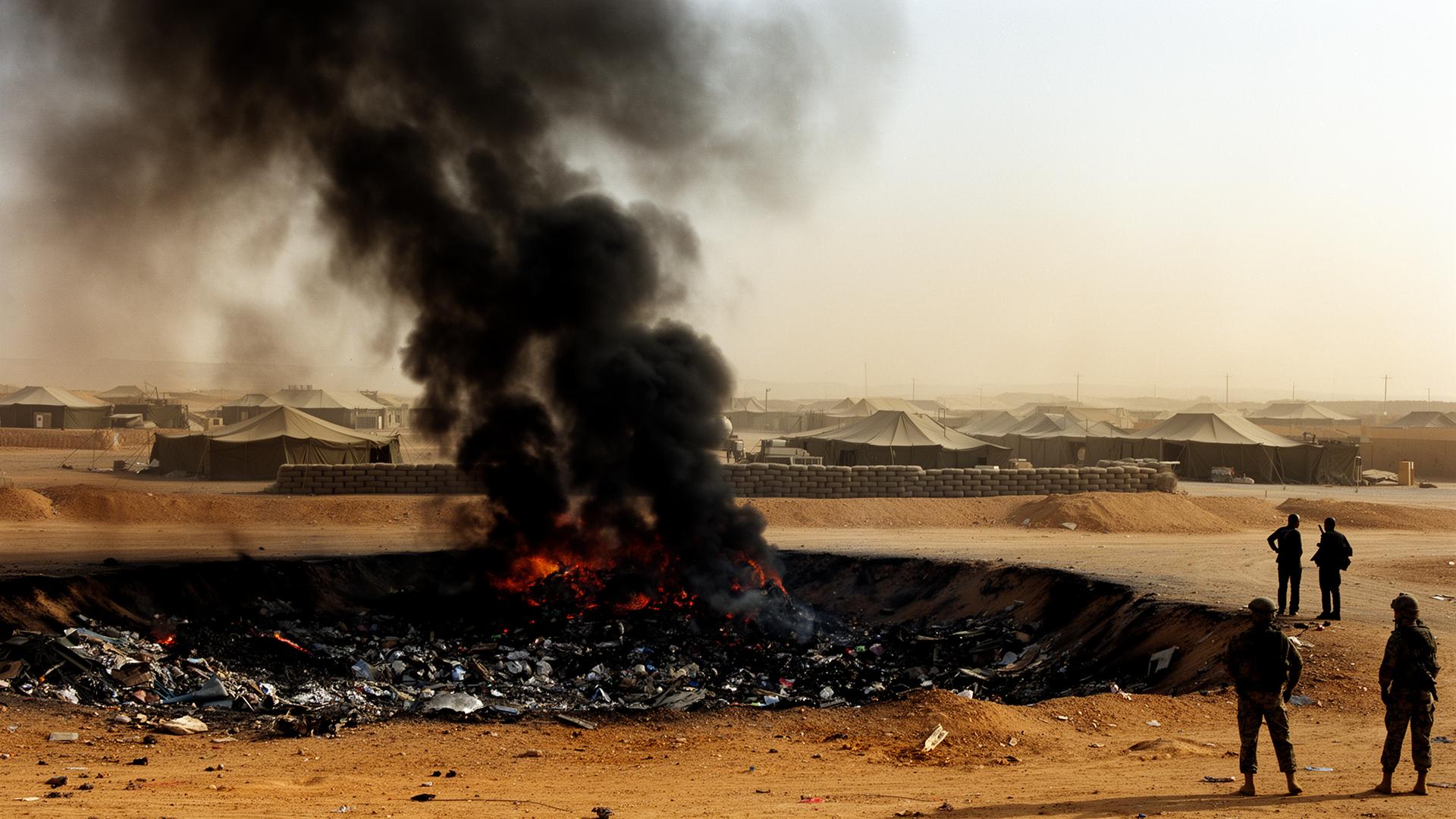
The Airborne Hazards and Open Burn Pit Registry (AHOBPR) is a free, voluntary VA database where eligible veterans and service members can self-report exposure to airborne hazards — burn pit smoke, oil-well fires, sand and dust, diesel exhaust, and other toxic inhalants encountered during deployment.
What it does:
- Documents your reported exposure history in a centralized VA record.
- Offers an optional, no-cost in-person health evaluation at a VA medical facility.
- Aggregates de-identified data so VA and Congress can track long-term health trends and shape future presumptive rulemaking.
Why it matters for claims:
- Registry participation is not required to file a PACT Act claim — the law does not condition presumptive service-connection on registry enrollment. Many veterans assume otherwise; that assumption costs filings.
- However, registry data can support a direct service-connection claim for conditions not on the presumptive list by establishing a documented exposure history and a medical evaluation record.
- Population-level registry findings have driven multiple presumptive expansions (the PACT Act of 2022, the 2021 rare cancer expansion, and ongoing VA rulemaking).
Who is eligible to enroll:
- Veterans and active-duty service members who served in the Southwest Asia Theater (Aug 2, 1990 – present), Afghanistan (Sep 11, 2001 – present), Djibouti, Egypt, Jordan, Lebanon, Somalia, Syria, Uzbekistan, or Yemen during the qualifying period.
- Survivors of eligible veterans cannot enroll, but can still file dependency claims and use the registry's existence in evidence development.
Enroll directly through VA.gov at veteran.mobilehealth.va.gov/AHBurnPitRegistry. Oakridge Claims does not enroll veterans on their behalf — registration is free and individual.

Camp Lejeune Water Contamination (1953–1987)
30+ days at MCB Camp Lejeune or MCAS New River between Aug 1953 and Dec 1987 triggers presumptive service-connection for eight conditions under 38 CFR § 3.309(f). The Camp Lejeune Justice Act of 2022 also created a separate federal tort path.
Read the full Camp Lejeune guide →
Jet Fuel (JP-8 / JP-5 / JP-4) Exposure
Hydrocarbon and benzene exposure for fuel handlers, flight-line crew, fuels lab personnel, and aircrew. Covered as a PACT Act airborne hazard for qualifying deployments; direct service-connection for stateside exposure.
Read the full jet fuel guide →Burn Pit Exposure — Full Guide
Open-air burn pits across the Southwest Asia theater and post-9/11 deployments. Covered locations, presumptive conditions, the Airborne Hazards Registry, and how to develop evidence.
Read the full burn pit guide →Presumptive Cancers
These cancers are presumed service-connected for veterans with qualifying toxic exposure (Gulf War-era and post-9/11 burn pit exposure under the PACT Act, plus older presumptions under Agent Orange and ionizing radiation programs).
Respiratory Presumptive Conditions
Chronic respiratory conditions presumed service-connected for veterans with qualifying burn pit / airborne hazard exposure under the PACT Act of 2022.
Other Presumptive Conditions
Additional conditions added by the PACT Act and subsequent VA regulatory action (38 CFR § 3.320 and related sections).
Important
Presumption applies only when the qualifying service period and exposure are met. A current diagnosis from a competent provider is still required. Conditions previously denied may be eligible for a Supplemental Claim based on the change in law — the PACT Act is treated as new and relevant evidence under 38 CFR § 3.156.
Frequently Asked Questions
Common questions about PACT Act eligibility, the Burn Pit Registry, and reopening prior denials.
Denied a PACT Act Claim? Or Never Filed?
Many pre-2022 denials are now eligible for review under the new presumption. Schedule a free consultation to discuss your specific exposure and diagnosis.
Educational content only — not legal advice and not medical advice. Conditions and eligibility periods reflect the PACT Act of 2022 and VA regulations as of the last review date and are subject to change. Consult VA.gov or 38 CFR Part 3 for current criteria. Outcomes depend on each veteran's individual service history, exposure, and evidence; no specific result is guaranteed. Oakridge Claims is a private business and is not affiliated with, endorsed by, or operated by the US Department of Veterans Affairs.