

Depleted Uranium Exposure
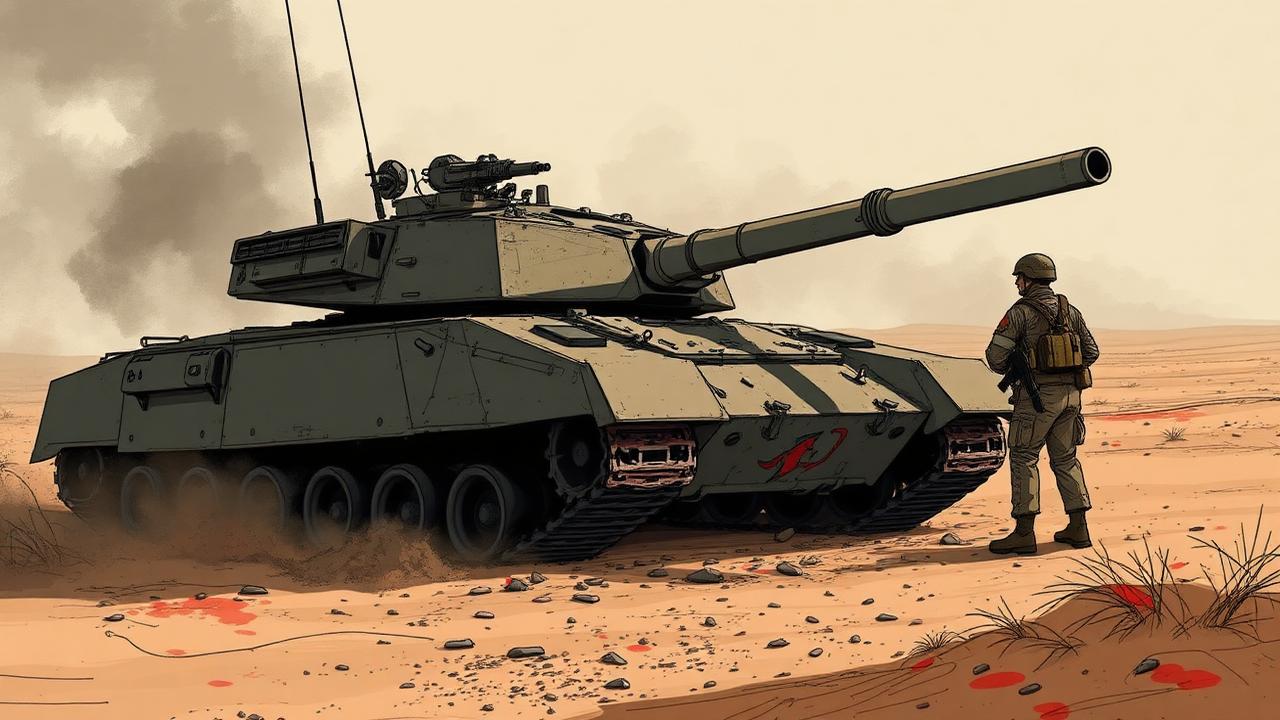
What is depleted uranium and where it was used
Depleted uranium is a dense, weakly radioactive heavy metal byproduct of uranium enrichment. The U.S. military uses it in armor-piercing munitions (most notably the M829 series 120mm tank rounds and the GAU-8 30mm rounds fired by A-10 Thunderbolt II aircraft) and in the composite armor of M1 Abrams tanks.
DU was used in significant quantities in the 1991 Gulf War, the 1999 Balkans intervention, the 2003 invasion of Iraq, and the early years of . Exposure to U.S. forces occurred primarily through three mechanisms: friendly-fire incidents involving DU-armored or DU-armed vehicles, vehicle recovery and salvage operations on DU-impacted equipment, and battlefield walk-through of areas where DU munitions had struck targets.
How exposure causes harm
- Inhalation — fine DU oxide particles created when a DU round impacts armor can be inhaled and deposited deep in the lungs.
- Embedded fragments — shrapnel from DU munitions can become lodged in tissue and slowly release uranium into the bloodstream.
- Ingestion — much less common, but possible from contaminated food or water in heavily impacted areas.
- DU is both a heavy-metal toxin (chemically similar to lead) and a low-level radiation source. The chemical toxicity is generally considered the more significant health risk than the radiological hazard.
VA Depleted Uranium Follow-Up Program
The VA operates the Depleted Uranium Follow-Up Program at the Baltimore VA Medical Center, which tracks veterans with confirmed or suspected DU exposure. The program offers urinary-uranium testing, embedded-fragment imaging, and long-term health surveillance.
Enrollment in the program is not required to file a disability , but the program's records are excellent supporting evidence for a direct-service-connection claim. Conditions commonly investigated include kidney dysfunction, neurocognitive symptoms, reproductive effects, and various cancers.
How DU exposure claims are evaluated
- Document your exposure — incident reports for friendly-fire events, unit assignment to vehicle-recovery operations, deployment orders showing service in DU-impact areas.
- Request enrollment in the VA Depleted Uranium Follow-Up Program and complete the urinary-uranium testing.
- Get a current diagnosis from a competent provider for a condition reasonably linked to heavy-metal or low-level radiation exposure.
- Obtain a medical opinion that addresses both the chemical-toxicity and radiological pathways.
- File as a direct-service-connection . If you also served in a covered location during a covered period, the burn-pit / airborne-hazard presumption may cover the same underlying conditions through a separate route.
Where these claims break down
- ×Not requesting urinary-uranium testing through the VA DU Follow-Up Program — it is the most direct evidence of significant exposure.
- ×Filing only as a Gulf War Illness claim when DU exposure can support a separate, condition-specific direct-service-connection claim.
- ×Overlooking the PACT Act presumption for Gulf War / OIF / OEF veterans — many DU-exposure conditions are covered by the broader airborne-hazard presumption without needing to isolate DU as the cause.
- ×Not preserving incident reports and unit records that document the specific exposure event.
Frequently Asked Questions
Useful Tools & Topics
Have questions about your specific case?
Tell us about your claim, rating increase, or VA decision for a free case evaluation — a decision letter is helpful but not required. If your matter fits our current scope, we'll invite you to schedule a consultation.
Disclaimer: This page is for educational purposes only and does not constitute legal advice. Oakridge Claims is a private business and is not affiliated with, endorsed by, or operated by the U.S. Department of Veterans Affairs. No guarantees of outcomes are made. Each claim is decided on its individual facts.
Related guides
Camp Lejeune Water Contamination
VA presumptives and the Camp Lejeune Justice Act for veterans who served at Lejeune or New River, 1953–1987.
Burn Pit Exposure
Open-air burn pit hazards under the PACT Act — covered locations, conditions, and evidence development.
Jet Fuel (JP-8 / JP-5 / JP-4) Exposure
Hydrocarbon exposure for aircraft fuel handlers, flight-line crew, and aircrew across all branches.
Asbestos Exposure
Mesothelioma, lung cancer, and asbestosis claims — Navy ratings and shipyard workers especially.