

Sand, Dust & Fine Particulate Matter
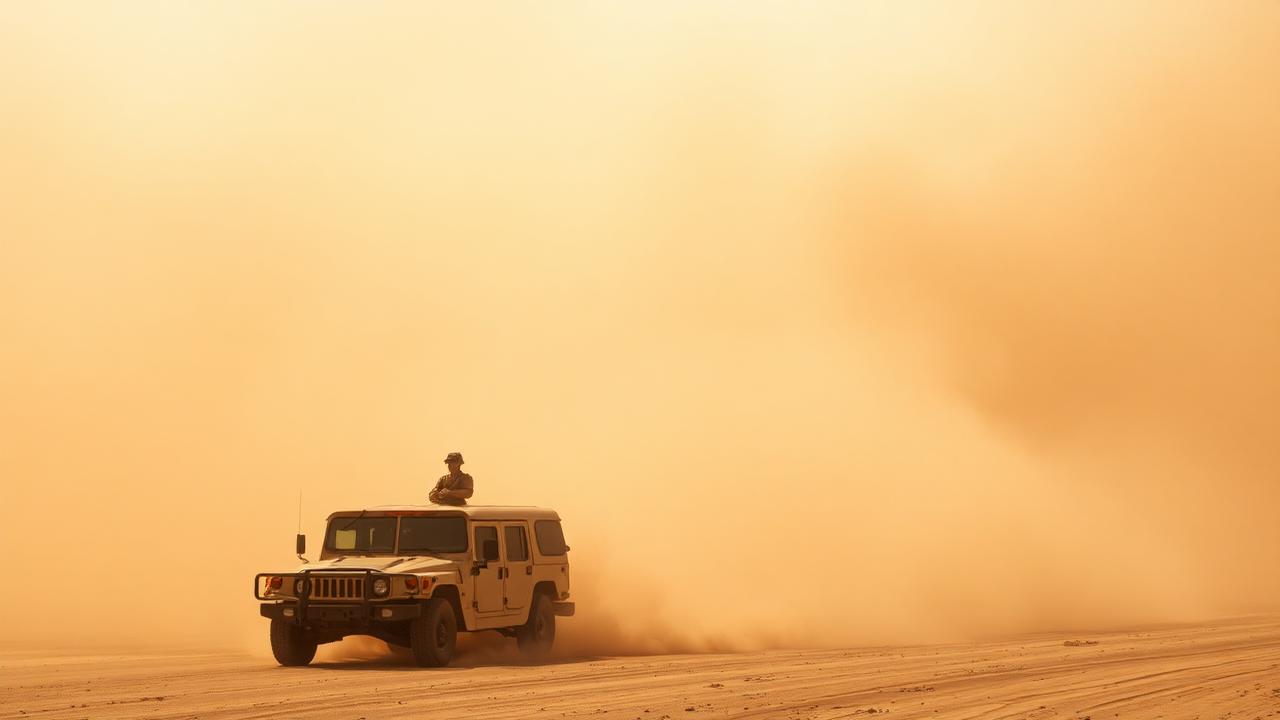
What Sand, dust & particulate matter is
- PM10 — coarse particulate (sand, dust) inhaled into the upper airway.
- PM2.5 — fine particulate that penetrates deep into the alveoli.
- Crystalline silica, heavy metals, and biological contaminants carried on dust particles.
- Persistent shamals (sustained northwesterly winds) created weeks-long PM episodes.
Who was exposed
- Service members deployed to Iraq, Kuwait, Afghanistan, Djibouti, Bahrain, Qatar, UAE, Oman, and other locations.
- Helicopter and rotary-wing crews whose downwash kicked up dust in landing zones.
- Convoy and transportation units operating on unpaved routes.
Recognized conditions & VA framework
- All § 1119 presumptive respiratory conditions: asthma, chronic bronchitis, COPD, sinusitis, rhinitis, constrictive bronchiolitis, emphysema, interstitial lung disease, pulmonary fibrosis, pleuritis, granulomatous disease.
- Listed cancers — lung, brain (including glioblastoma), gastrointestinal, head and neck, kidney, melanoma, and others.
Evidence to gather
- DD-214 with qualifying post-9/11 or Southwest Asia service dates.
- Treating-provider records diagnosing the listed condition.
- Symptom timeline tying onset to deployment or post-deployment period.
Claim path
- For listed conditions: file under § 1119 / 38 CFR § 3.320 — no opinion required.
- For non-listed conditions: file as with a opinion citing PM exposure.
Where these claims break down
- ×Filing PM-related claims separately from burn-pit claims — both are part of the same airborne-hazards presumption.
- ×Not enrolling in the Airborne Hazards and Open Burn Pit Registry, which documents exposure and creates a paper trail.
Frequently Asked Questions
Useful Tools & Topics
Have questions about your specific case?
Tell us about your claim, rating increase, or VA decision for a free case evaluation — a decision letter is helpful but not required. If your matter fits our current scope, we'll invite you to schedule a consultation.
Disclaimer: This page is for educational purposes only and does not constitute legal advice. Oakridge Claims is a private business and is not affiliated with, endorsed by, or operated by the U.S. Department of Veterans Affairs. No guarantees of outcomes are made. Each claim is decided on its individual facts.
Related guides
CARC paint exposure
1985 – present (vehicle and equipment painting). Chemical Agent Resistant Coating (CARC) is the standard military paint applied to tanks, vehicles, aircraft, and equipment. CARC contains is…
Mefloquine / Lariam
1989 – present (anti-malarial prophylaxis). Mefloquine (brand name Lariam) is an anti-malarial prophylaxis widely prescribed to deployed U.S. service members in Africa, Southeast Asia,…
Pyridostigmine bromide (PB pills)
1990 – 1991 (Operations Desert Shield and Desert Storm). Pyridostigmine bromide (PB) is an investigational nerve-agent pretreatment fielded during the 1990 – 1991 Gulf War. Roughly 250,000 U.S. ser…
Military pesticides
All eras (especially Vietnam and Gulf War). Service members are routinely exposed to DEET skin repellents, permethrin-treated uniforms, and organophosphate area sprays in malaria, sand…