

Pyridostigmine Bromide (PB) Pills
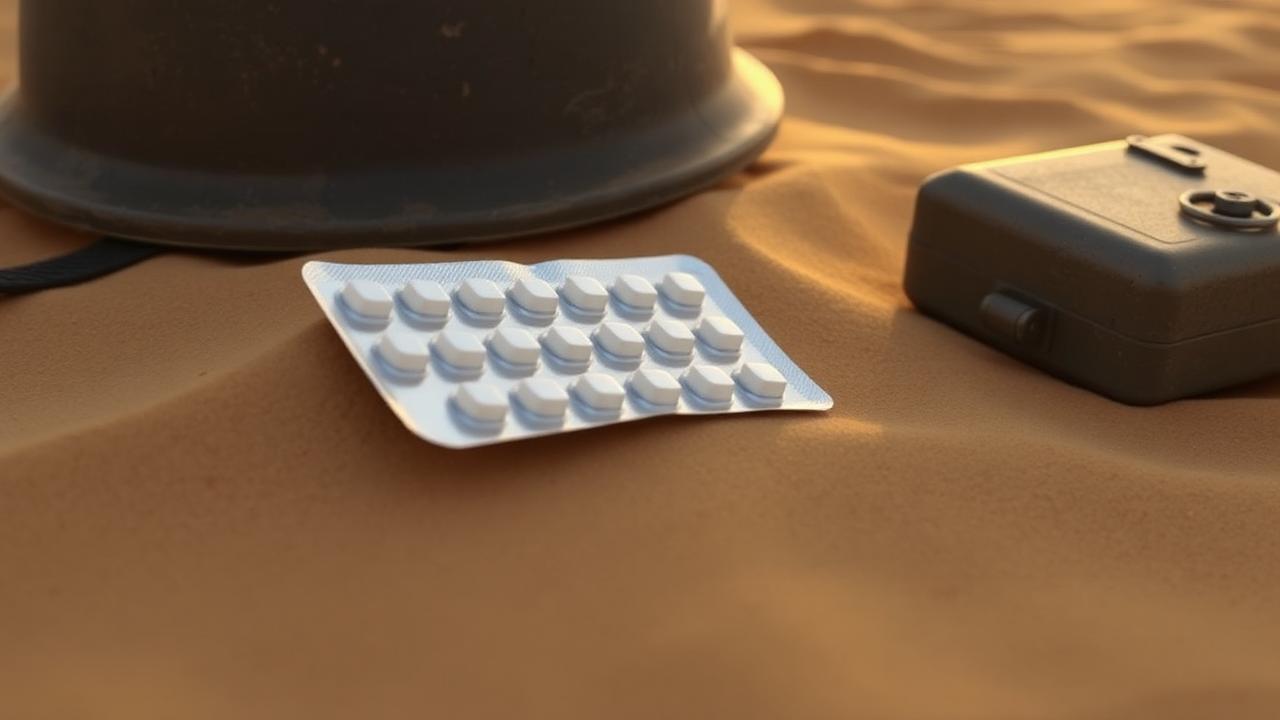
What Pyridostigmine bromide (PB pills) is
- A reversible cholinesterase inhibitor intended to pretreat against the nerve agent soman.
- Issued as small white tablets in foil blister packs taken every 8 hours during the threat period.
- Compliance was high — taking PB was a lawful order under the Investigational New Drug authorization.
- Synergistic toxicity has been hypothesized when PB was combined with permethrin (uniform treatment), DEET (skin repellent), and low-level sarin exposure.
Who was exposed
- U.S. service members deployed to the during Operations Desert Shield and Desert Storm.
- Highest exposure: ground combat and forward-deployed units (XVIII Airborne, VII Corps, USMC ground units).
- Documented in unit logs and individual medical records of the period.
Recognized conditions & VA framework
- PB exposure is part of the broader presumption under 38 CFR § 3.317.
- Undiagnosed chronic multisymptom illness (fatigue, cognitive, musculoskeletal, GI) — presumptive for qualifying Gulf War veterans.
- MUCMI diagnoses (fibromyalgia, chronic fatigue syndrome, functional GI disorders) — listed § 3.317 presumptives.
- Direct claims for peripheral neuropathy, cognitive dysfunction, and chronic GI symptoms tied to documented PB exposure.
Evidence to gather
- DD-214 establishing Southwest Asia service between August 2, 1990 and the present.
- Treating-provider documentation of chronic symptoms persisting 6+ months.
- Symptom log capturing fatigue, cognitive, GI, and musculoskeletal patterns.
- Unit records or buddy statements confirming PB was issued and taken.
- opinion for direct claims that fall outside § 3.317 presumptions.
Claim path
- For Gulf War veterans with chronic multisymptom illness, file under 38 CFR § 3.317 — the cleanest path.
- Cite the § 3.317 presumption expressly on .
- For specific diagnosed conditions outside § 3.317 (e.g., peripheral neuropathy), file as with a opinion citing PB.
Where these claims break down
- ×Filing for 'Gulf War Illness' generically rather than identifying each symptom cluster so each can be rated.
- ×Forgetting to cite § 3.317 — adjudicators sometimes default to direct service-connection rules.
- ×Missing the December 31, 2026 symptom-manifestation deadline (subject to extension).
Frequently Asked Questions
Useful Tools & Topics
Have questions about your specific case?
Tell us about your claim, rating increase, or VA decision for a free case evaluation — a decision letter is helpful but not required. If your matter fits our current scope, we'll invite you to schedule a consultation.
Disclaimer: This page is for educational purposes only and does not constitute legal advice. Oakridge Claims is a private business and is not affiliated with, endorsed by, or operated by the U.S. Department of Veterans Affairs. No guarantees of outcomes are made. Each claim is decided on its individual facts.
Related guides
Kuwait oil-well fires
February – November 1991. Iraqi forces set fire to roughly 600 Kuwaiti oil wells during their February 1991 retreat. The fires burned until November 1991 and produced…
Military pesticides
All eras (especially Vietnam and Gulf War). Service members are routinely exposed to DEET skin repellents, permethrin-treated uniforms, and organophosphate area sprays in malaria, sand…
Toxic embedded fragments
Combat injuries — Gulf War onward (with earlier-era applicability). Service members injured by IEDs, mortar, RPG, or small-arms fire frequently retain metal fragments — including depleted uranium, lead, tungs…
Mefloquine / Lariam
1989 – present (anti-malarial prophylaxis). Mefloquine (brand name Lariam) is an anti-malarial prophylaxis widely prescribed to deployed U.S. service members in Africa, Southeast Asia,…