

Fort McClellan Toxic Exposures (Alabama)
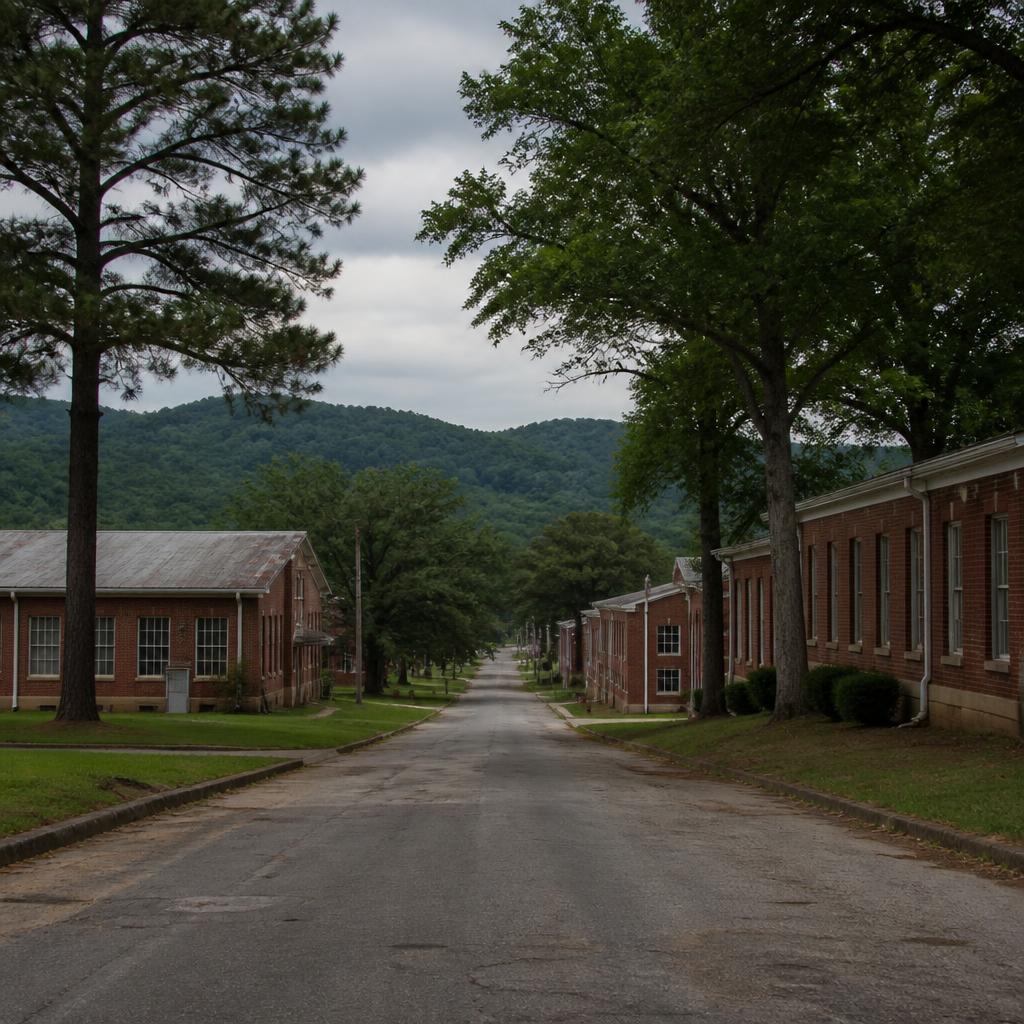
What Fort McClellan, Alabama is
- PCBs from the Monsanto Anniston facility (one of the most heavily PCB-contaminated communities in the U.S.) reached on-base soil, air, and groundwater.
- Radioactive compounds (depleted-uranium training rounds, americium, cesium, and others) used in chemical warfare and decontamination training at the Chemical Corps School.
- Live-agent and simulant chemical warfare training — mustard, lewisite, sarin (in extremely small quantities for detection training and decontamination practice).
- CS gas mask-confidence chambers — every trainee was exposed during NBC training.
Who was exposed
- Chemical Corps School trainees and instructors, 1951 – 1999.
- Women's Army Corps Center trainees, 1954 – 1976.
- Military Police School trainees and cadre.
- Permanent-party soldiers and DoD civilians assigned to Fort McClellan or Anniston Army Depot.
- Family members residing on post during PCB exposure window.
Recognized conditions & VA framework
- There is no Fort McClellan-specific presumptive list. Claims are filed as with an independent opinion linking the diagnosed condition to documented McClellan exposures.
- Conditions commonly claimed: thyroid disease, non-Hodgkin's lymphoma and other lymphomas, breast cancer, prostate cancer, liver disease, reproductive issues, neurological disorders, and skin conditions consistent with PCB and chemical training exposures.
- The proposed Fort McClellan Health Registry Act (multiple Congresses) would create a registry but has not become law as of this update.
Evidence to gather
- DD-214 or service records confirming Fort McClellan assignment and dates.
- Unit records showing Chemical Corps School, WAC Center, MP School, or Anniston Army Depot duty.
- Treating-provider records diagnosing the claimed condition.
- () connecting the condition to documented McClellan exposures (PCB, radioactive compounds, chemical training agents, CS gas).
- Buddy statements from fellow trainees describing shared training scenarios and exposure events.
Claim path
- Because no presumption exists, file as a direct service-connection and cite Fort McClellan toxic exposures specifically.
- Attach service records showing assignment and a opinion from a treating or independent physician.
- If denied for lack of presumption, consider a or with stronger evidence rather than appealing on the same evidence.
- VA recognizes Fort McClellan exposures on the Public Health site even without a statutory presumption — that recognition supports the argument.
Where these claims break down
- ×Filing as a 'PACT Act' or 'Camp Lejeune' claim — McClellan has its own evidentiary path and is not covered by either statute.
- ×Submitting without a nexus opinion and hoping VA will infer the link.
- ×Forgetting to claim secondary conditions (e.g., depression secondary to chronic thyroid disease).
- ×Missing the chance to enroll in the VA Health Registry exam — even without a presumption, the exam creates contemporaneous documentation.
Frequently Asked Questions
Useful Tools & Topics
Have questions about your specific case?
Tell us about your claim, rating increase, or VA decision for a free case evaluation — a decision letter is helpful but not required. If your matter fits our current scope, we'll invite you to schedule a consultation.
Disclaimer: This page is for educational purposes only and does not constitute legal advice. Oakridge Claims is a private business and is not affiliated with, endorsed by, or operated by the U.S. Department of Veterans Affairs. No guarantees of outcomes are made. Each claim is decided on its individual facts.
Related guides
Khamisiyah & chemical warfare agents
Khamisiyah: March 1991 · Edgewood/CHASE: 1955 – 1975. Three distinct warfare-agent exposure events have VA recognition. Khamisiyah (March 1991): U.S. forces demolished an Iraqi ammunition depot …
Fort Ord, California
1917 – 1994 (closed under BRAC; EPA Superfund site since 1990). Fort Ord on California's Monterey Bay was a major Army training installation that operated for most of the 20th century. EPA designated the …
CARC paint exposure
1985 – present (vehicle and equipment painting). Chemical Agent Resistant Coating (CARC) is the standard military paint applied to tanks, vehicles, aircraft, and equipment. CARC contains is…
Pyridostigmine bromide (PB pills)
1990 – 1991 (Operations Desert Shield and Desert Storm). Pyridostigmine bromide (PB) is an investigational nerve-agent pretreatment fielded during the 1990 – 1991 Gulf War. Roughly 250,000 U.S. ser…