

Heat-Injury Residuals
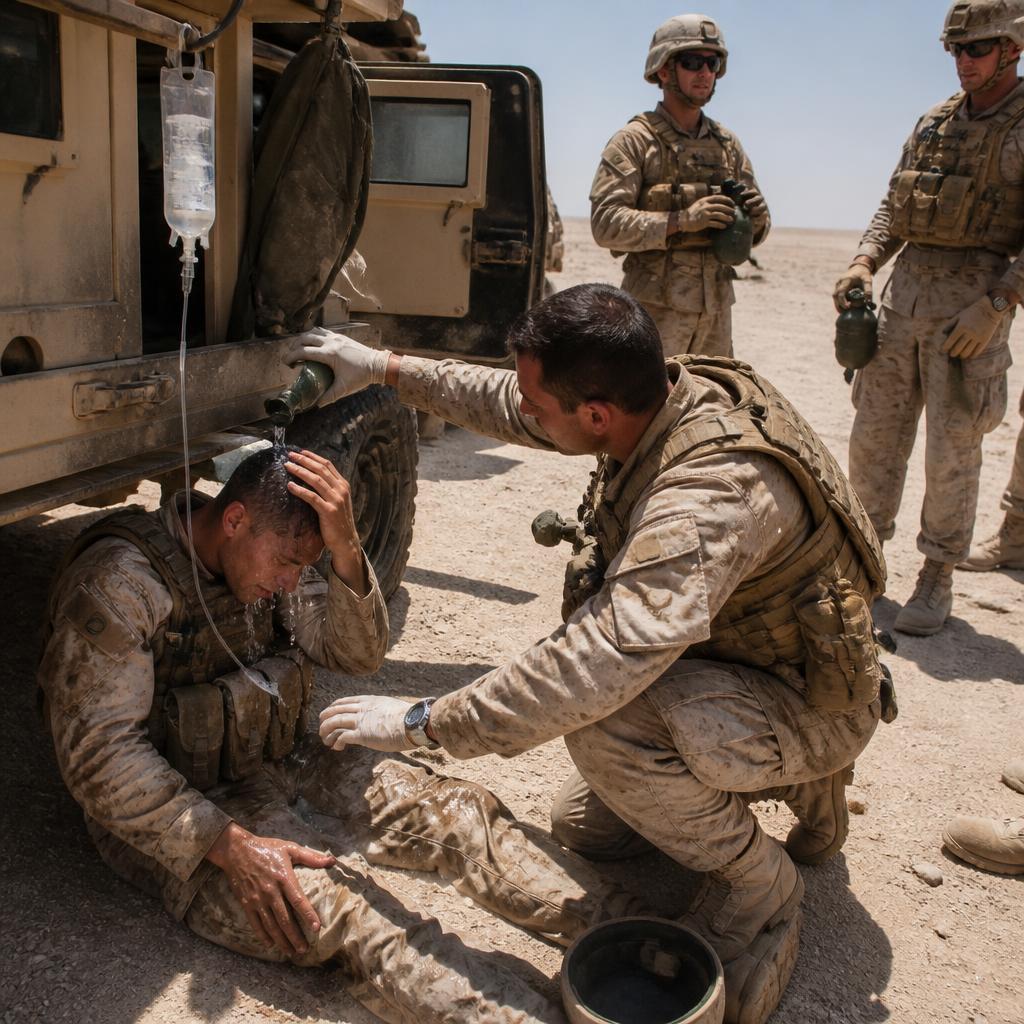
What Heat injury is
- Heat stroke (core temp >40°C with CNS dysfunction) — the most severe heat injury.
- Heat exhaustion progressing to acute kidney injury.
- Exertional rhabdomyolysis associated with heat events.
- Residuals: persistent heat intolerance, exercise limitation, recurrent rhabdomyolysis vulnerability, renal residuals, possible long-term cardiovascular effects.
Who was exposed
- Service members deployed to high-heat environments (Southwest Asia, Africa Command).
- Trainees and instructors at hot-climate training installations (Fort Benning, Fort Bragg, Twentynine Palms, Parris Island).
- Soldiers in heavy MOPP/body armor configurations.
Recognized conditions & VA framework
- Heat-injury residuals are typically rated by analogy under the affected body system (renal, cardiovascular, autonomic).
- Recurrent exertional rhabdomyolysis with cold/heat trigger.
- Chronic kidney disease secondary to heat-related AKI.
- Mental-health sequelae (PTSD secondary to near-death heat event) — separately ratable.
Evidence to gather
- Service medical records documenting the heat event (line-of-duty determination, hospital records, evacuation paperwork).
- Treating-provider records of persistent heat intolerance or related residuals.
- Renal function testing.
- Buddy statements describing the heat event and the 's recovery.
Claim path
- File as citing the original heat-injury event.
- Rate residuals by their organ system (renal, autonomic, cardiovascular).
- Add secondary mental-health if applicable.
Where these claims break down
- ×Filing only for 'heat exhaustion' without specifying the persistent residuals.
- ×Not pulling the line-of-duty determination or hospital records from the original event.
Frequently Asked Questions
Useful Tools & Topics
Have questions about your specific case?
Tell us about your claim, rating increase, or VA decision for a free case evaluation — a decision letter is helpful but not required. If your matter fits our current scope, we'll invite you to schedule a consultation.
Disclaimer: This page is for educational purposes only and does not constitute legal advice. Oakridge Claims is a private business and is not affiliated with, endorsed by, or operated by the U.S. Department of Veterans Affairs. No guarantees of outcomes are made. Each claim is decided on its individual facts.
Related guides
Cold injury
All eras (notably Korea, Aleutians, Bastogne, and any cold-weather operation). Frostbite, immersion (trench) foot, and other cold-weather injuries leave residual peripheral neuropathy, cold sensitivity, skin discolorati…
Heat Injury Secondary Conditions
What to file when a service-connected heat injury (heat stroke, heat exhaustion, exertional hyponatremia) causes secondary conditions — how to build nexus evidence and what red flags to avoid.
Fort McClellan, Alabama
1935 – 1999 (Chemical Corps School & WAC Center). Fort McClellan housed the U.S. Army Chemical Corps School, the Women's Army Corps Center, and Anniston Army Depot operations. Soldiers, trai…
CARC paint exposure
1985 – present (vehicle and equipment painting). Chemical Agent Resistant Coating (CARC) is the standard military paint applied to tanks, vehicles, aircraft, and equipment. CARC contains is…